SEOLREIM · JOURNAL
Fractional Laser Treatment for Acne Scars: CO2 vs. Non-Ablative Lasers and Recovery Time
Full professional English translation completed and self-reviewed against the Korean source; numerical tokens and medical cautions preserved; separate medical review of this translation is pending. Translation updated: 2026-10-28.
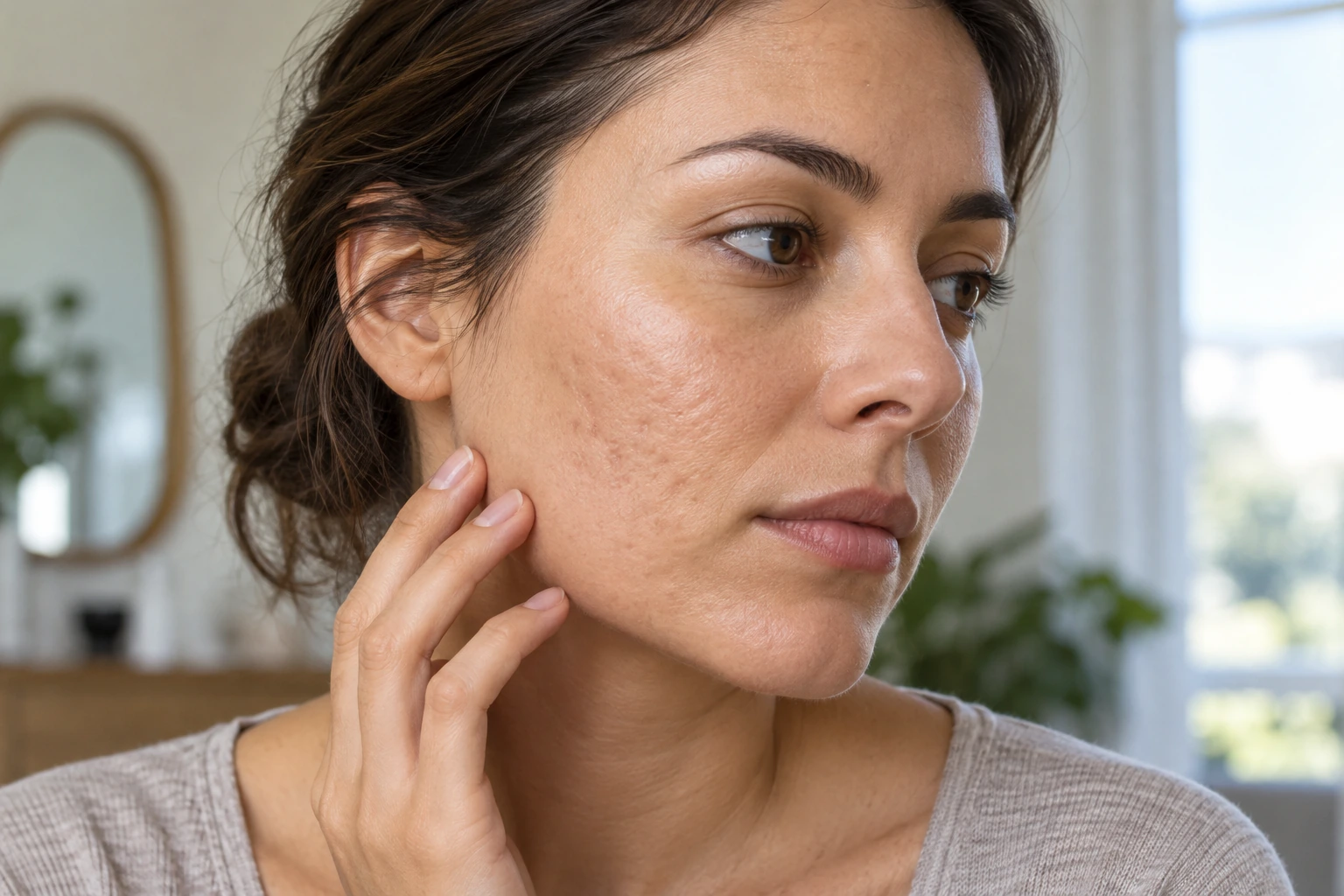
Fractional lasers create microscopic treatment columns to induce remodeling instead of removing the entire skin surface at once. Ablative CO2 systems may produce stronger effects and require more recovery, while non-ablative systems reduce epidermal injury, but neither method erases every acne scar. Selection should reflect scar type, skin tone, and the recovery time available.
Ablative CO2 vs. non-ablative fractional lasers
| Category | Characteristics | Typical recovery and precautions |
|---|---|---|
| Ablative CO2 | Creates microscopic ablation and thermal columns in the epidermis and dermis | Relatively greater risk of oozing, crusting, erythema, and PIH |
| Non-ablative Er:Glass and similar systems | Creates microscopic thermal columns in the dermis while preserving the epidermis | Redness, swelling, and dryness; multiple sessions may be needed |
| Shared limitations | Limited as a stand-alone treatment for tethered rolling scars or deep ice-pick scars | Assess combination treatment such as subcision or TCA CROSS |
How the procedure works
Fractional photothermolysis divides laser energy into points, leaving microscopic treatment zones alongside areas of normal skin. It induces collagen remodeling during wound healing, but higher wavelength, density, energy, or pass count is not always better and may increase the risks of thermal injury and pigmentation.
Potential benefits and limitations
Shallow boxcar scars, some rolling scars, rough texture, and the appearance of enlarged pores may improve. Subcision may be more appropriate for strongly tethered rolling scars, while TCA CROSS or punch techniques may be more appropriate for narrow, deep ice-pick scars. A realistic goal is to reduce scar depth and shadow gradually rather than remove scars completely.
Who may be suitable and when to avoid treatment
Candidates are adults whose active acne is stable and who can follow wound-care and sun-protection instructions. Recent tanning, active dermatitis, infection or herpes, keloids, impaired wound healing, photosensitizing medication, pregnancy or breastfeeding, and recent strong peels, laser treatment, or isotretinoin use require separate assessment of timing and risk.
Procedure and expected recovery period
Scar type and skin tone are documented, and laser treatment is performed after anesthesia, protective eyewear, and test settings. With non-ablative treatment, redness, swelling, and dryness usually last several days. With ablative CO2, oozing and crusting may last about 5–10 days, while redness can persist for several weeks or longer. Because post-inflammatory hyperpigmentation may last longer in darker skin tones, treatment should be avoided before schedules involving strong sun exposure.
Side effects, contraindications and warning signs
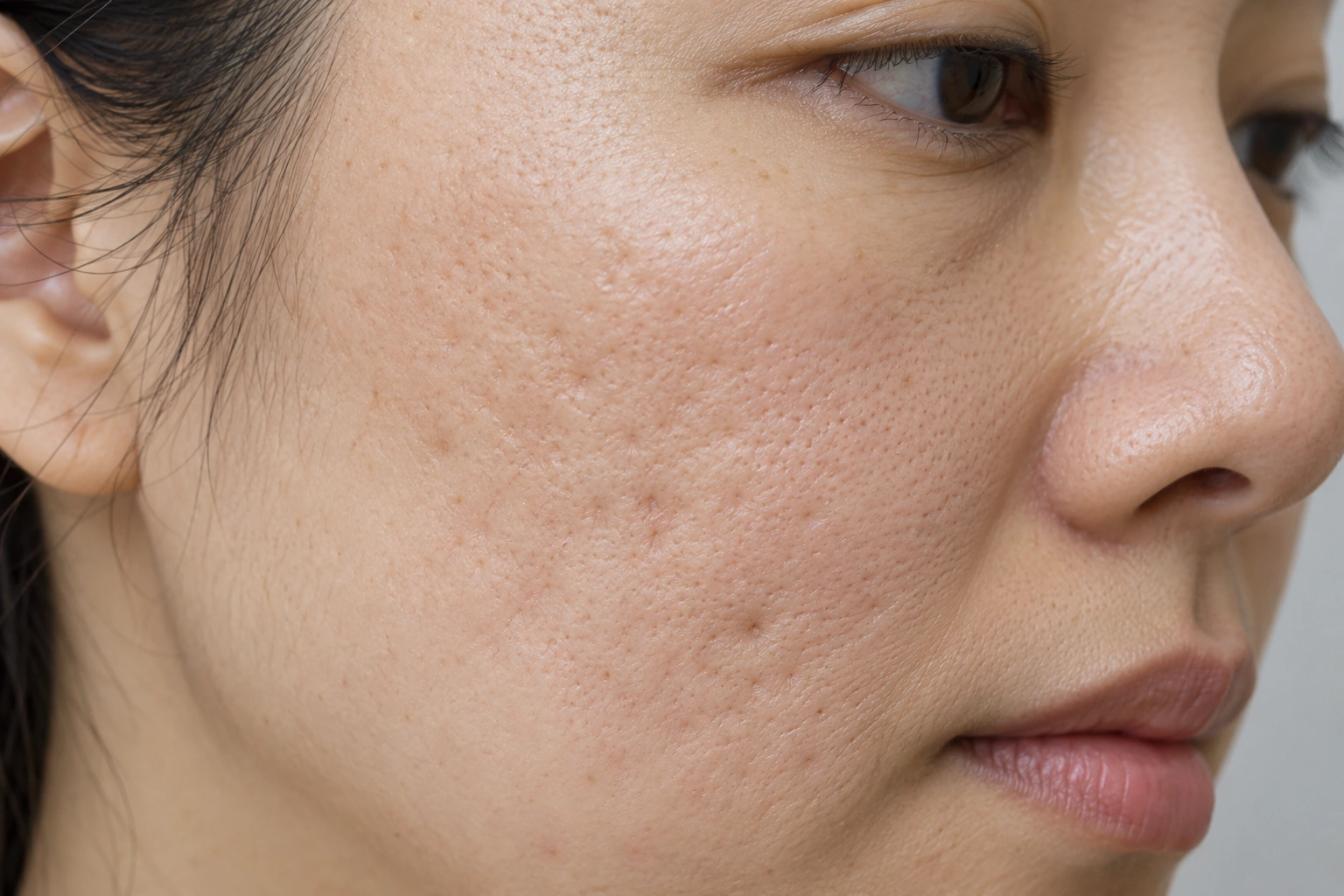
In addition to pain, redness, swelling, scaling, and temporary acne worsening, possible complications include infection, herpes reactivation, prolonged erythema, hyperpigmentation or hypopigmentation, scarring, and grid-pattern marks. Blisters, pus, worsening pain or heat, or symptoms around the eyes require immediate medical evaluation. Picking crusts or using strong exfoliation increases risk.
Differences from subcision and radiofrequency microneedling
| Method | Main target | Key limitations and risks |
|---|---|---|
| Fractional laser | Microscopic thermal injury and remodeling in the epidermis and dermis | PIH, erythema, infection, and limited benefit for tethering alone |
| Subcision | Fibrous tethering beneath the skin | Bruising and hematoma; limited as a standalone treatment for ice-pick scars |
| Radiofrequency microneedling | Dermal heat delivery through needles | Possibility of burns, fat injury, and nerve injury |
| TCA CROSS | Narrow, deep ice-pick scars | Crusting and PIH; limited benefit for broad rolling scars |
Medical Q&A
Q. Is a CO2 laser always better?
A. Because it involves more intensive recovery and a greater PIH risk, a non-ablative method may be more appropriate depending on skin tone, scar type, and schedule.
Q. Can pores be eliminated completely?
A. Pores are related to sebum, elasticity, and scarring, so complete removal cannot be guaranteed.
Q. Can I fly after laser treatment?
A. More important than the flight itself is whether you can manage the wound, avoid sun exposure, and obtain care for infection or an adverse reaction.
References
For a 2025 systematic review of fractional CO2 treatment for acne scars, we consulted PubMed(https://pubmed.ncbi.nlm.nih.gov/40566567/), and for a meta-analysis comparing CO2 and Er:YAG, we consulted PubMed(https://pubmed.ncbi.nlm.nih.gov/38733085/). We also reviewed the American Academy of Dermatology's guidance on treatment by scar type(https://www.aad.org/public/diseases/acne/derm-treat/scars/treatment).
SEOLREIM's treatment planning by scar type
SEOLREIM Clinic does not select a device based only on the name Fraxel. The doctor directly classifies active acne, rolling scars, boxcar scars, ice-pick scars, pores, and skin tone, then plans the necessary sequence of 2–3 treatments among Silky Pore, subcision, laser, and skin boosters.
Information for international visitors
Visitors searching for acne scar treatment Korea or pore treatment Korea should disclose isotretinoin or antibiotic use, keloids or herpes, and reactions to previous lasers. Ablative procedures require wound assessment before departure and an adequate period of sun protection. SEOLREIM Clinic is on the 11th floor of the Gangnam 8258 Building, about 1 minute from Exit 3 of Gangnam Station. International visitors should prepare their passport, allergy information, current medications, recent procedure records, and return schedule, and confirm available consultation languages and the scope of interpretation support before booking. Depending on the examination, same-day treatment may not be possible or follow-up after returning home may be needed.
Author, reviewer, publication date and update date
Written by: SEOLREIM Content Editor / Medical review of the Korean source: completed / Review confirmed: 2026-10-23 / Published: 2026-09-24 / Updated: 2026-10-27. This is general medical information and does not replace an individual diagnosis or prescribed treatment.
SEOLREIM · GANGNAM, SEOUL
Discuss Skin Treatments in Seoul with Seolreim Clinic.
Seolreim Clinic provides doctor-led consultation and treatment, following its principles of genuine products, accurate quantities and attentive care.
Tell us your treatment interests, skin concerns, dates in Korea and preferred consultation language. Confirm treatment suitability, recovery plans and language support before booking.