SEOLREIM · JOURNAL
Acne patch effects: Hydrocolloid versus microneedle patches
Full translation of the Korean article. Translation checked for completeness, numerical consistency and medical meaning; separate medical review of this translation is pending. Translation updated: 2026-10-28.
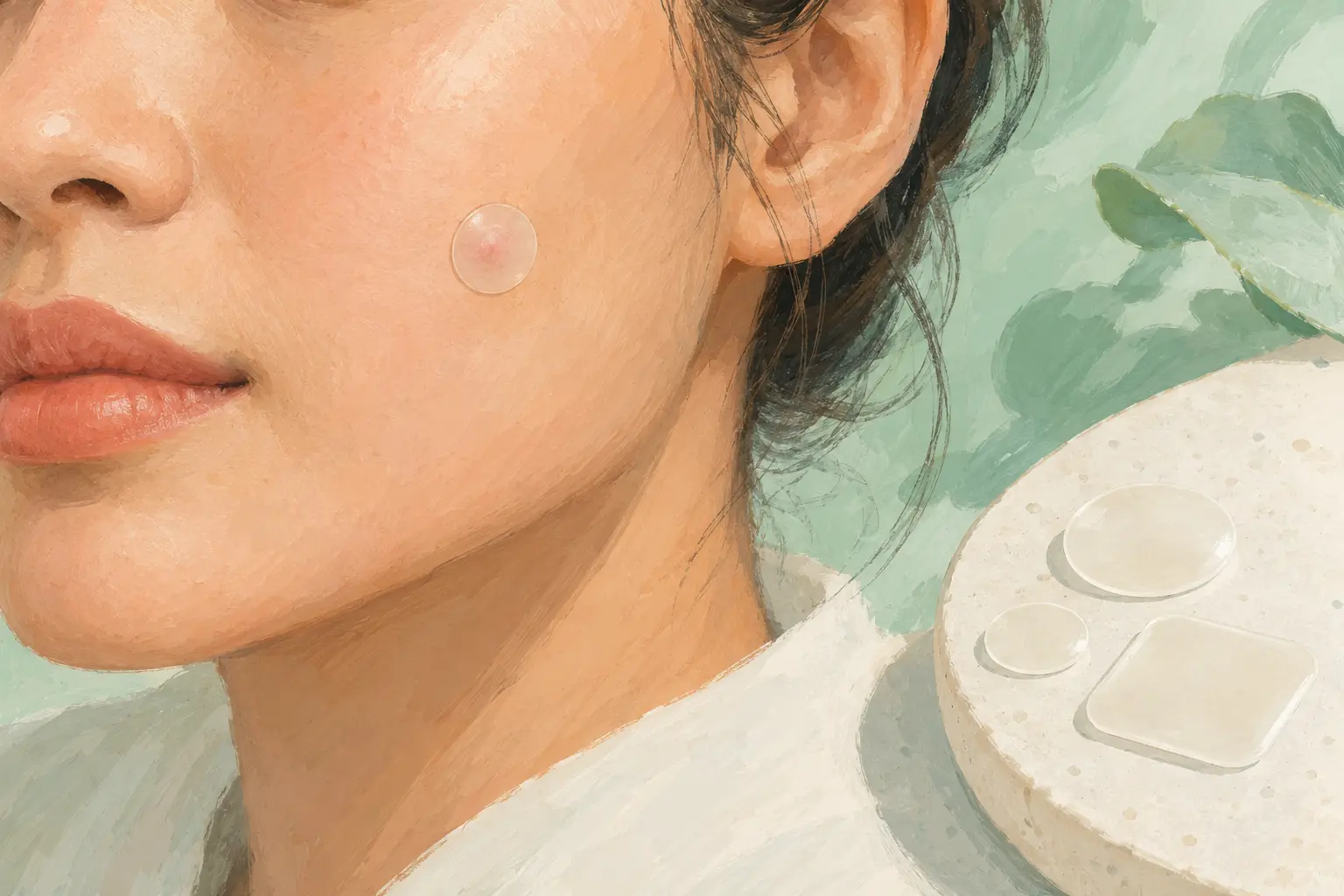
Hydrocolloid acne patches may absorb fluid from open, shallow lesions and reduce touching, but do not pull out sebum at its root or treat deep nodules or cysts. Microneedle patches are a separate product group that delivers drugs or ingredients through tiny projections. Small studies exist, but ingredients, projection length, sterilization, and authorization vary, so they cannot be considered invariably more effective than ordinary patches.
Definition, benefits and precautions at a glance
| Category | What to check |
|---|---|
| Hydrocolloid | Absorb fluid, provide moist protection, reduce touching |
| Microneedle patch | Deliver product-specific ingredients through tiny projections |
| Suitable lesions | A single open or weeping lesion close to the surface |
| Limitations | Not definitive treatment for deep nodules, cysts, comedones, or extensive acne |
| Cautions | Adhesive irritation, dermatitis, infection, and unhygienic reuse |
Definitions and how the treatments work
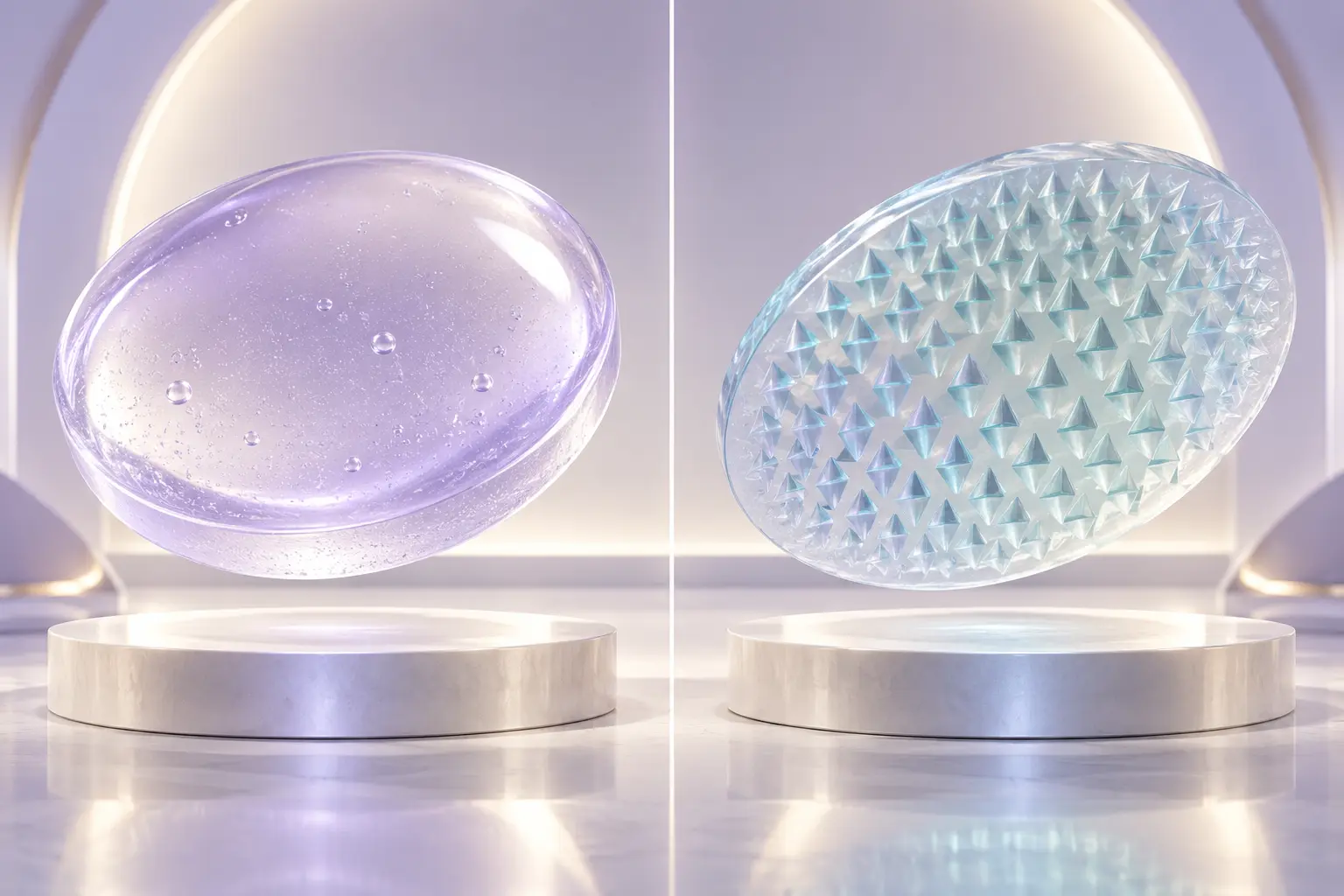
Hydrocolloid absorbs water and exudate, becomes gel-like, and reduces external friction and hand contact. Whitening of a patch reflects absorbed water/exudate and hydration of the material, not proof that all sebum and pus inside the acne have been removed. Dissolving microneedles create tiny channels at the skin surface; delivered ingredients and safety must be checked in each product’s documentation.
Potential benefits and limitations
A small double-blind randomized pilot study reported possible improvements in redness, oiliness, and other indicators of inflammatory lesions with hydrocolloid dressings, but included only 20 participants. A 2025 review also discusses potential acne applications while noting limited evidence. Microneedle studies are likewise generally small and short; findings for a specific ingredient cannot be transferred to other patches.
Suitable candidates and preliminary assessment
People who repeatedly touch small, superficial inflammatory lesions may use patches as an adjunct. Deep painful nodules or cysts, extensive acne, suspected impetigo or herpes, severe eczema or adhesive allergy, or impaired wound healing require diagnosis before patches. During pregnancy or breastfeeding, or with drug allergies, check the active ingredients in microneedle patches.
Procedure, recovery and preparation
Wash hands and skin, dry completely, then apply a patch slightly larger than the lesion. Follow the manufacturer’s recommended duration and single-use rule; do not reattach a lifted patch. Support the skin and remove slowly, stopping if irritation occurs. Combining occlusion with benzoyl peroxide, retinoids, or acidic products may increase irritation, so check combination-use instructions.
Adverse effects, contraindications and precautions
Adhesive-related redness, itching, blisters, epidermal peeling, moisture damage from occlusion, and rare infection are possible. With microneedle patches, consider stinging, pinpoint bleeding, ingredient allergy, and contamination. If pain or swelling increases, redness spreads, or warmth, pus, or fever develops, seek care rather than keeping the lesion covered. Do not delay nodule treatment believing a patch prevents scarring.
Acne patches versus standard treatment
| Method | Main goal | Key differences and precautions |
|---|---|---|
| Hydrocolloid patch | Absorb exudate and block friction/touching | Limited treatment of deep lesions and comedones |
| Dissolving microneedle patch | Local delivery of product-specific ingredients | Ingredients, projections, sterilization, and evidence vary by product |
| Benzoyl peroxide/retinoids | Ongoing management of comedones, inflammation, and the acne process | Check irritation, pregnancy, and antibiotic combinations |
| Intralesional injection/incision | Medical treatment of selected large inflammatory lesions | Risk of indentation, pigmentation changes, and infection; performed by a healthcare professional |
Questions and answers for a medical consultation
The answers below are literature-based consultation questions, not a clinician interview or individual diagnosis; actual medical review remains incomplete.
Q. Does a white patch mean all the sebum has come out?
A. No. The material changes as it absorbs exudate and water; this does not mean removal of deep sebum or comedones.
Q. Can I put one on deep, painful acne?
A. Effects on deep nodules and cysts are limited, and scarring is a risk, making early dermatologic assessment more important.
Q. Are microneedle patches always better than ordinary patches?
A. No. Delivered ingredients, projections, authorizations, and small studies differ, so assess each product separately.
Evidence sources and full text
Randomized pilot study of hydrocolloid acne patches (https://pubmed.ncbi.nlm.nih.gov/16688374/), review of dermatologic hydrocolloid applications (2025, https://pubmed.ncbi.nlm.nih.gov/40004874/), clinical trial of dissolving microneedle acne patches (https://pubmed.ncbi.nlm.nih.gov/36059276/) were consulted. Evidence checked: 2026-10-09. Small studies of specific products were not generalized to every patch.
SEOLREIM’s principle of consultations and procedures performed personally by the director
SEOLREIM Clinic explains its principles of consultations and procedures performed directly by the clinic director, genuine products, exact quantities, and attentive care. Consultations first distinguish skin condition and goals, then check products and devices actually available, approved indications, dosage or energy plans, recovery, and risks. Signature pore/acne programs distinguish comedones, inflammation, nodules, and scars, with the director coordinating home care, extraction, peeling, and lasers. Check patch sales or prescribing availability and combination plans during examination.
Booking, language, and location information for overseas visitors
Visitors seeking acne or pore treatment in Korea should share photos of their patches, ingredients, retinoids, and antibiotics, and obtain a continuation plan for after returning home to avoid layering multiple new products during travel. SEOLREIM Clinic is on floor 11 of the Gangnam8258 Building, approximately 1 minute from exit 3 of Gangnam Station. Book through the website’s KakaoTalk consultation, Naver Booking, or telephone channels. Overseas visitors comparing dermatology clinics in Gangnam, Seoul, near Gangnam Station, or elsewhere in Korea should prepare their medications, allergies, recent procedures, and departure schedule. When booking, specify the preferred language, such as Japanese, Chinese, Arabic, Mongolian, or Indonesian, and whether interpretation is needed, and confirm the actual scope and cost of support. Continuous consultations in each language or same-day procedures cannot be guaranteed. Also agree during consultation on how to report adverse reactions after returning home and the follow-up schedule.
Authorship, review and dates
Written by: SEOLREIM content editor / Medical professional review: completed / Review confirmation: 2026-10-23 / Published: 2026-10-09 / Updated: 2026-10-27. General medical information, not a substitute for individual diagnosis or procedure prescriptions.
SEOLREIM · GANGNAM, SEOUL
Discuss Skin Treatments in Seoul with Seolreim Clinic.
SEOLREIM Clinic provides care based on consultations and procedures performed directly by the clinic director and the principles of genuine products, exact quantities, and attentive care.
Tell us your treatment interests, skin concerns, dates in Korea and preferred consultation language. Confirm treatment suitability, recovery plans and language support before booking.