SEOLREIM · JOURNAL
Melasma treatment during pregnancy: When to use hydroquinone, retinoids, or lasers?
Full translation of the Korean article. Translation checked for completeness, numerical consistency and medical meaning; separate medical review of this translation is pending. Translation updated: 2026-10-28.
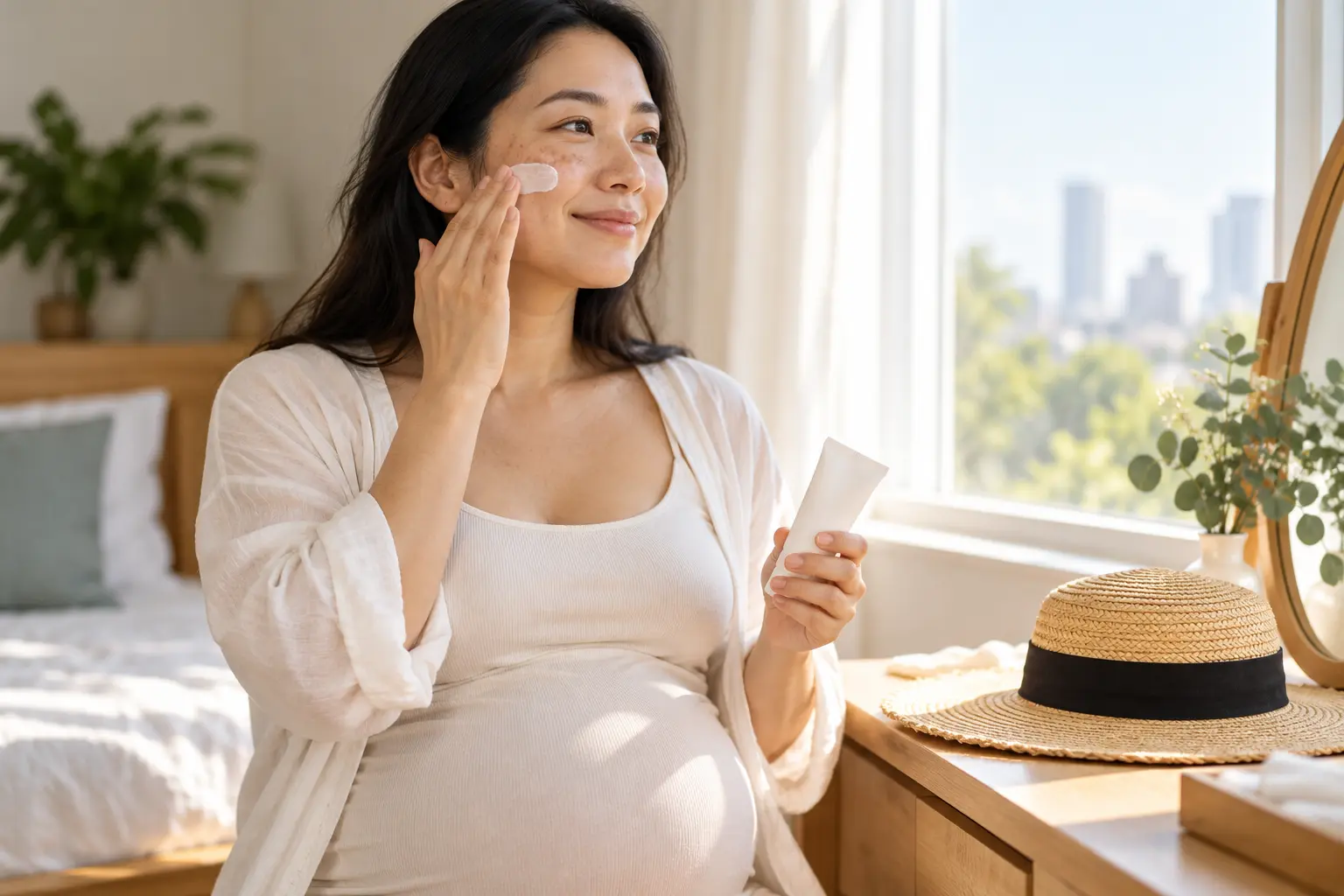
New melasma during pregnancy is primarily managed with UV/visible-light protection and reduced irritation. Hydroquinone and retinoids are generally avoided because of limited safety data or concerns about fetal risk. Elective cosmetic procedures such as lasers and peels are often deferred until after delivery, considering pregnancy safety and recurrence. However, not all pigmentation is melasma: check first with dermatology and obstetrics.
Definition, benefits and precautions at a glance
| Category | What to check |
|---|---|
| First-line care | Wide brims, shade, clothing, and pregnancy-appropriate sun protection |
| Usually avoided | Unsupervised hydroquinone, retinoids, or oral pigmentation drugs |
| Elective procedures | For lasers/peels, assess diagnosis, device, anesthetic, and pregnancy timing; often postponed |
| After delivery | Reassess treatment considering breastfeeding, skin condition, and hormonal changes |
| Signs requiring medical care | Rapidly changing moles, bleeding, pain, or one-sided lesions |
Definitions and how the treatments work
Changes in estrogen, progesterone, and melanocyte stimulation during pregnancy can worsen melasma, while UV and visible light promote pigment production. It may fade after delivery but can persist or recur. Melasma includes mixed epidermal/dermal components and varies with skin tone; aggressive treatment may instead induce post-inflammatory pigmentation.
Potential benefits and limitations
A 2026 international Delphi consensus emphasizes photoprotection and long-term recurrence management in melasma. During pregnancy, fetal/maternal safety and avoiding unnecessary irritation take priority over cosmetic benefit. Hydroquinone is known for substantial skin absorption but lacks pregnancy safety data; even with low systemic absorption of topical retinoids, specialist organizations and guidance recommend precautionary avoidance.
Suitable candidates and preliminary assessment
If pigmentation develops during pregnancy, report onset, symmetry, itching/bleeding, existing melasma/moles, drugs/cosmetics, gestational age, and obstetric risks. Do not independently use lightening creams with unclear ingredients, products possibly adulterated with mercury/steroids, oral tranexamic acid, or high-dose supplements. Changes suspicious for skin cancer need prompt diagnosis, separately from deferring cosmetic treatment.
Procedure, recovery and preparation
Use gentle cleansing/moisturization, hats/clothing, and sunscreen according to product directions, reducing irritation and friction. Test new products on a small area and share all ingredients with obstetrics and dermatology. For lasers/peels, assess melasma diagnosis, skin tone, gestational age, anesthetics, sedation, pain, infection, and limited evidence; generally reassess after delivery. Report breastfeeding even postpartum.

Adverse effects, contraindications and precautions
Irritating lightening agents or peels can cause erythema, dermatitis, burns, post-inflammatory pigmentation, or worsening melasma. Lasers carry pain, blistering, pigment changes, scarring, and recurrence, with insufficient safety data for elective use during pregnancy. If retinoids or hydroquinone have already been used, do not react independently out of fear; report product, concentration, and duration to obstetrics for individual risk counseling.
Options for managing melasma during pregnancy
| Method | Main goal | Key differences and precautions |
|---|---|---|
| Photoprotection | Reduce UV and visible-light exposure | Basic care; select products for skin tone and sensitivity |
| Hydroquinone | Inhibition of melanin production | Generally avoided because of absorption and insufficient pregnancy data |
| Topical retinoids | Adjuncts for cell turnover and pigmentation treatment | Precautionary avoidance recommended during pregnancy |
| Lasers and peels | Elective pigmentation and skin-renewal treatment | Often deferred until postpartum because of safety data, irritation, and recurrence |
Questions and answers for a medical consultation
The answers below are literature-based consultation questions, not a clinician interview or individual diagnosis; actual medical review remains incomplete.
Q. Can I continue retinol cosmetics used before pregnancy?
A. Topical retinoids are generally advised against during pregnancy. Show product names to obstetrics/dermatology and check alternatives.
Q. I applied hydroquinone once. Is that serious?
A. Do not infer an outcome from a single exposure. Record amount, concentration, and duration, consult obstetrics, and do not continue independently.
Q. Are lasers safe because they do not reach the fetus?
A. Direct reach is not the only issue. Consider pregnancy safety data, pain, anesthesia, skin response, and the need for an elective procedure together.
Evidence sources and full text
International Delphi consensus on melasma (2026,https://pubmed.ncbi.nlm.nih.gov/40996222/), American Academy of Dermatology retinoid guidance (https://www.aad.org/public/everyday-care/skin-care-secrets/anti-aging/retinoid-retinol), clinical review of topical retinoids (https://pmc.ncbi.nlm.nih.gov/articles/PMC8750127/) were consulted. Evidence checked: 2026-10-08. Individual prescribing during pregnancy requires obstetric and dermatologic assessment.
SEOLREIM’s principle of consultations and procedures performed personally by the director
SEOLREIM Clinic explains its principles of consultations and procedures performed directly by the clinic director, genuine products, exact quantities, and attentive care. Consultations first distinguish skin condition and goals, then check products and devices actually available, approved indications, dosage or energy plans, recovery, and risks. Signature whitening/brightening distinguishes melasma, solar lentigines, and post-inflammatory pigmentation and postpones or adjusts elective procedures for pregnancy/breastfeeding. Check actual prescribing/procedure eligibility during pregnancy through obstetric coordination and examination.
Booking, language, and location information for overseas visitors
Visitors seeking pregnancy pigmentation treatment in Korea should share gestational age, obstetric records, current cosmetics, and departure date in advance, and confirm consultations with interpretation and postpartum follow-up plans. SEOLREIM Clinic is on floor 11 of the Gangnam8258 Building, approximately 1 minute from exit 3 of Gangnam Station. Book through the website’s KakaoTalk consultation, Naver Booking, or telephone channels. Overseas visitors comparing dermatology clinics in Gangnam, Seoul, near Gangnam Station, or elsewhere in Korea should prepare their medications, allergies, recent procedures, and departure schedule. When booking, specify the preferred language, such as Japanese, Chinese, Arabic, Mongolian, or Indonesian, and whether interpretation is needed, and confirm the actual scope and cost of support. Continuous consultations in each language or same-day procedures cannot be guaranteed. Also agree during consultation on how to report adverse reactions after returning home and the follow-up schedule.
Authorship, review and dates
Written by: SEOLREIM content editor / Medical professional review: completed / Review confirmation: 2026-10-23 / Published: 2026-10-08 / Updated: 2026-10-27. General medical information, not a substitute for individual diagnosis or procedure prescriptions.
SEOLREIM · GANGNAM, SEOUL
Discuss Skin Treatments in Seoul with Seolreim Clinic.
SEOLREIM Clinic provides care based on consultations and procedures performed directly by the clinic director and the principles of genuine products, exact quantities, and attentive care.
Tell us your treatment interests, skin concerns, dates in Korea and preferred consultation language. Confirm treatment suitability, recovery plans and language support before booking.