SEOLREIM · JOURNAL
RF lifting with pacemakers or metal implants: Checking device-specific contraindications
Full translation of the Korean article. Translation checked for completeness, numerical consistency and medical meaning; separate medical review of this translation is pending. Translation updated: 2026-10-28.
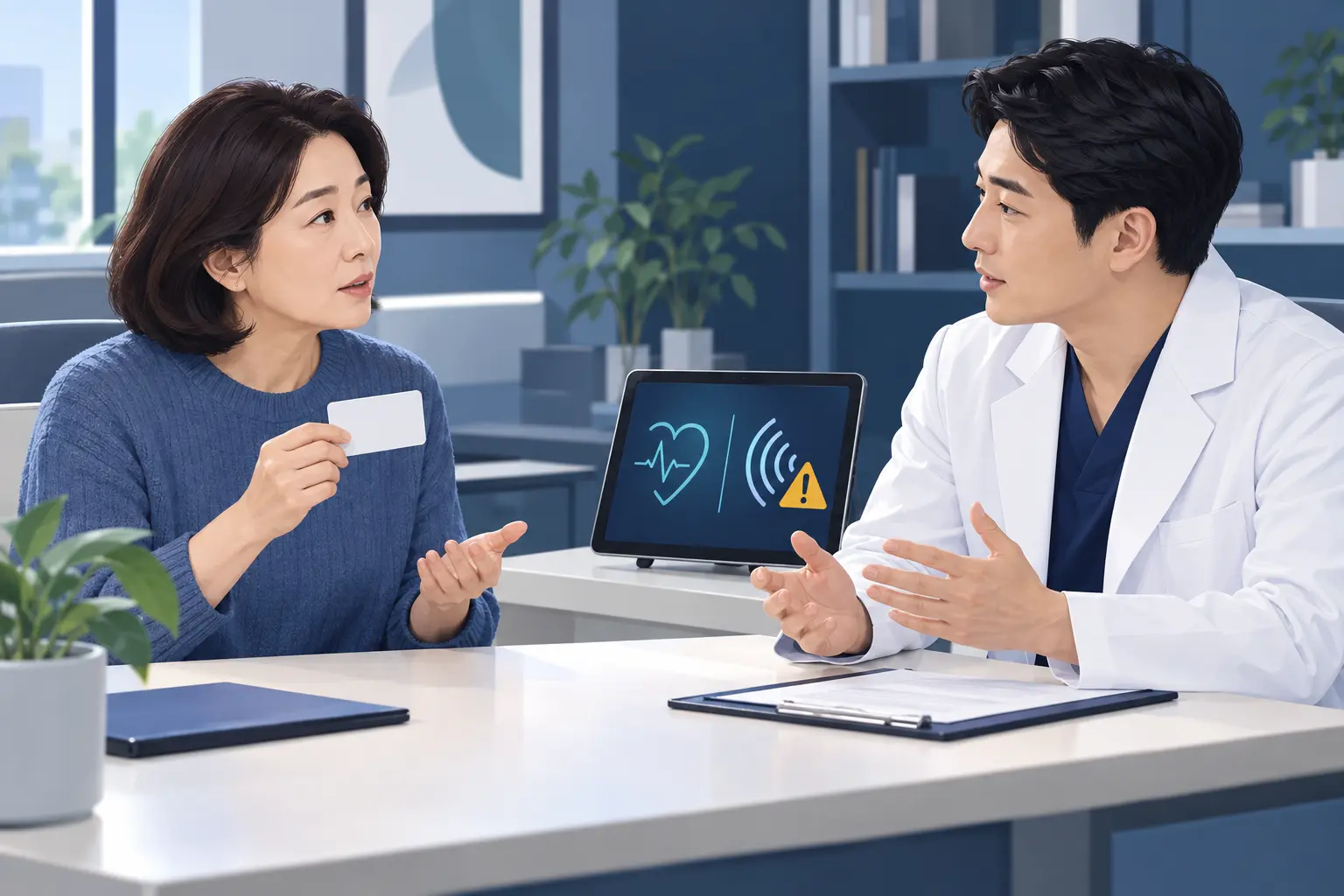
With electrically operated implants such as pacemakers or implantable defibrillators, check exact equipment instructions and with the treating cardiac team before booking RF lifting. For example, Thermage FLX’s manufacturer lists implanted electrical devices including pacemakers/defibrillators as contraindications. Passive metals such as dental implants or orthopedic hardware cannot all be placed in the same category; check location, material, treatment site, and device-specific instructions separately.
Definition, benefits and precautions at a glance
| Category | What to check |
|---|---|
| Always check first | Active implants such as pacemakers, ICDs, neurostimulators, or drug pumps |
| Separate assessment | Location/material of dental implants, prostheses, and orthopedic metal |
| Evidence standards | Manufacturer instructions and Korean authorization for the actual RF device |
| Preparation | Implant card, surgical records, and treating doctor’s contact details |
| Judgments to avoid | Assuming all metal is contraindicated or dental metal is always safe |
Definitions and how the treatments work
Cosmetic RF generates tissue-resistance heat through current between electrodes. Monopolar, bipolar, and multipolar methods, grounding, cooling, and depths differ; electromagnetic interference or localized heating may also vary by device/implant. Manufacturers may contraindicate active electronics because functions such as cardiac rhythm or nerve stimulation could be affected. Passive metal also needs separate risk assessment by type/location.
Potential benefits and limitations
Studies of noninvasive RF report limited improvement in mild/moderate laxity and wrinkles, but devices, settings, and assessments are heterogeneous. This cannot establish safety in people with implants, and cosmetic benefit does not outweigh possible device malfunction. Other energy procedures are not automatically safe when one is contraindicated; check each device’s guidance anew.
Suitable candidates and preliminary assessment
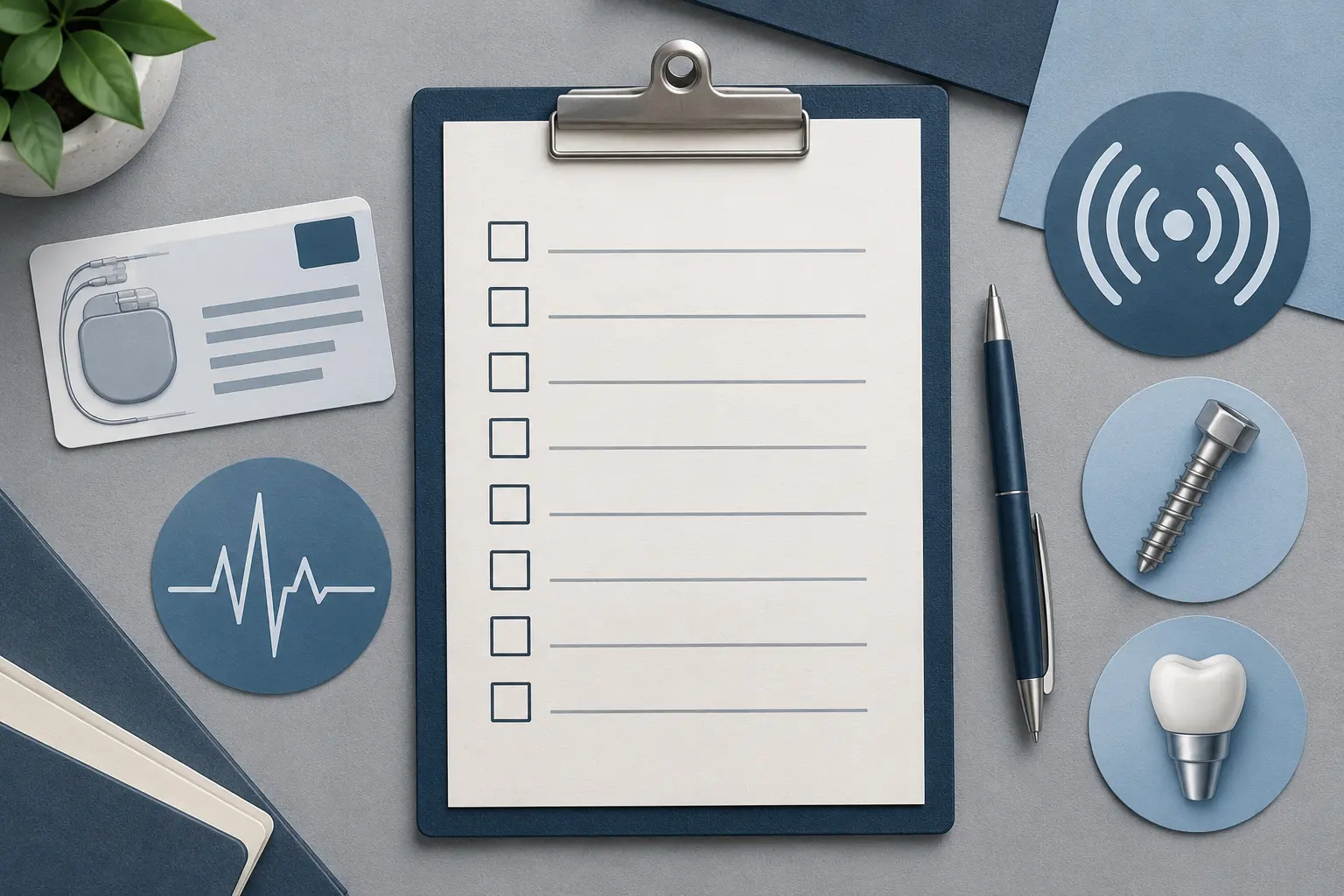
For pacemakers/defibrillators, cochlear implants, brain/spinal stimulators, insulin/drug pumps, plates/screws/prostheses, dental implants, or unidentified implants, report name, manufacturer, model, location, and implantation date. Also check arrhythmia/heart disease, reduced sensation, active infection/wounds, pregnancy/breastfeeding, and recent surgery. Without a card, obtain implanting-hospital records rather than guessing.
Procedure, recovery and preparation
Before booking, identify the actual RF device and sites and check current manufacturer contraindications/warnings. Share implant cards, imaging, and surgical records; obtain the implant specialist’s opinion if needed. Do not disregard contraindications because “low power is fine” or the site is far away. Even when permitted, plan monitoring of pain, warmth, palpitations, dizziness, and device status.
Adverse effects, contraindications and precautions
RF may cause pain, redness, swelling, blisters, burns, pigment changes, scars, and rare fat/nerve injury. Effects on electronics vary by device, and safety cannot be guaranteed when manufacturer contraindications are violated. Chest pain, palpitations, faintness, breathlessness, or abnormal device alarms require immediate cessation and emergency assessment. Severe burns, blisters, or sensory loss also need prompt care.
Checks by implant type
| Method | Main goal | Key differences and precautions |
|---|---|---|
| Active cardiac devices | Pacemakers and implantable defibrillators | Contraindicated for Thermage FLX; check actual device instructions |
| Other active devices | Neurostimulators, pumps, cochlear devices, etc. | Check manufacturer, model, and electromagnetic-interference guidance |
| Passive metal | Dental/orthopedic plates, screws, etc. | Assess location, material, and site; not a blanket contraindication |
| Unidentified implants | Unknown product, location, or implantation date | Defer energy procedures until records are found |
Questions and answers for a medical consultation
The answers below are literature-based consultation questions, not a clinician interview or individual diagnosis; actual medical review remains incomplete.
Q. Can I not have Thermage with dental implants?
A. Dental metal is not equivalent to active cardiac devices. Check actual device guidance, treatment site, and material individually.
Q. With a pacemaker, can only my face be treated gently?
A. When manufacturers explicitly contraindicate implanted electrical devices, as with Thermage FLX, do not create exceptions by guessing intensity or site.
Q. Are other lifting devices safe?
A. HIFU, RF, and lasers have different mechanisms and contraindications; alternative devices require separate checks of their instructions and the treating doctor’s judgment.
Evidence sources and full text
Thermage FLX manufacturer safety information (https://www.thermage.com/), systematic review of noninvasive RF facial/neck rejuvenation (https://pubmed.ncbi.nlm.nih.gov/34923652/), review of cosmetic RF safety and efficacy (https://pmc.ncbi.nlm.nih.gov/articles/PMC7489578/) were consulted. Evidence checked: 2026-10-07. Manufacturer contraindications must be rechecked in the latest Korean instructions for the actual device.
SEOLREIM’s principle of consultations and procedures performed personally by the director
SEOLREIM Clinic explains its principles of consultations and procedures performed directly by the clinic director, genuine products, exact quantities, and attentive care. Consultations first distinguish skin condition and goals, then check products and devices actually available, approved indications, dosage or energy plans, recovery, and risks. For signature lifting such as Thermage, the director checks actual equipment, genuine tips, implant contraindications, and skin condition. Confirm device availability and suitability for a particular implant through record review before booking, not from this article.
Booking, language, and location information for overseas visitors
Visitors seeking Thermage in Korea or Gangnam dermatology should send implant cards, English medical certificates, and treating-doctor contacts in advance and confirm interpretation, alternative scheduling, and care after returning home. SEOLREIM Clinic is on floor 11 of the Gangnam8258 Building, approximately 1 minute from exit 3 of Gangnam Station. Book through the website’s KakaoTalk consultation, Naver Booking, or telephone channels. Overseas visitors comparing dermatology clinics in Gangnam, Seoul, near Gangnam Station, or elsewhere in Korea should prepare their medications, allergies, recent procedures, and departure schedule. When booking, specify the preferred language, such as Japanese, Chinese, Arabic, Mongolian, or Indonesian, and whether interpretation is needed, and confirm the actual scope and cost of support. Continuous consultations in each language or same-day procedures cannot be guaranteed. Also agree during consultation on how to report adverse reactions after returning home and the follow-up schedule.
Authorship, review and dates
Written by: SEOLREIM content editor / Medical professional review: completed / Review confirmation: 2026-10-23 / Published: 2026-10-07 / Updated: 2026-10-27. General medical information, not a substitute for individual diagnosis or procedure prescriptions.
SEOLREIM · GANGNAM, SEOUL
Discuss Skin Treatments in Seoul with Seolreim Clinic.
SEOLREIM Clinic provides care based on consultations and procedures performed directly by the clinic director and the principles of genuine products, exact quantities, and attentive care.
Tell us your treatment interests, skin concerns, dates in Korea and preferred consultation language. Confirm treatment suitability, recovery plans and language support before booking.