SEOLREIM · JOURNAL
532nm laser for pigment spots: distinguishing solar lentigines from melasma, and recovery from crusting and pigmentation
Full translation of the Korean article. Translation checked for completeness, numerical consistency and medical meaning; separate medical review of this translation is pending. Translation updated: 2026-10-28.

A 532nm laser may be used selectively for superficial pigment lesions such as solar lentigines, but melasma, post-inflammatory pigmentation and suspected tumours must not be treated as identical blemishes. Even at the same wavelength, actual device characteristics differ among picosecond, Q-switched, long-pulse, KTP and frequency-converted Nd:YAG systems, so results and recovery differ. Crusting, redness and post-inflammatory hyperpigmentation (PIH) must all be considered.
Definition, benefits and precautions at a glance
| Category | What to check |
|---|---|
| Candidates | Selected diagnosed lesions, such as solar lentigines |
| Wavelength | 532nm is information distinct from the device name and pulse duration |
| Recovery | Darkening, small crusts and erythema may occur; usually monitored for several days to 1–2 weeks |
| Delayed reaction | PIH may develop weeks later and persist |
| Examination first | Rapid growth, irregular changes or bleeding require assessment before cosmetic laser treatment |
Definitions and how the treatments work
Pigment lasers use absorption of light energy by melanin and other targets, but can also affect surrounding epidermis and vessels. As 532nm is a short visible wavelength, skin colour, recent tanning, epidermal pigment and settings need attention. KTP and frequency-converted Nd:YAG can generate 532nm, so names alone do not establish identical devices; picosecond and Q-switched describe pulse-duration categories.
Potential benefits and limitations
Split-face comparative trials reported improvements in solar-lentigo measures with 532nm picosecond and Q-switched Nd:YAG. Results for particular settings in a small study cannot be generalised as superiority across all skin colours or models. Even after lightening, recurrence or new lesions can occur depending on sunlight and skin condition; melasma is a different condition requiring photoprotection, medication and irritation control.
Suitable candidates and preliminary assessment
Adults concerned about defined brown spots first need differentiation of solar lentigines, seborrhoeic keratoses, melasma and other lesions. Report recent tanning, sunburn, skin infection, wounds, photosensitising medicines, PIH or scarring history, pregnancy, breastfeeding and recent procedures. With darker skin or previous PIH, test spots, settings, alternatives and risks are assessed individually.
Procedure, recovery and preparation
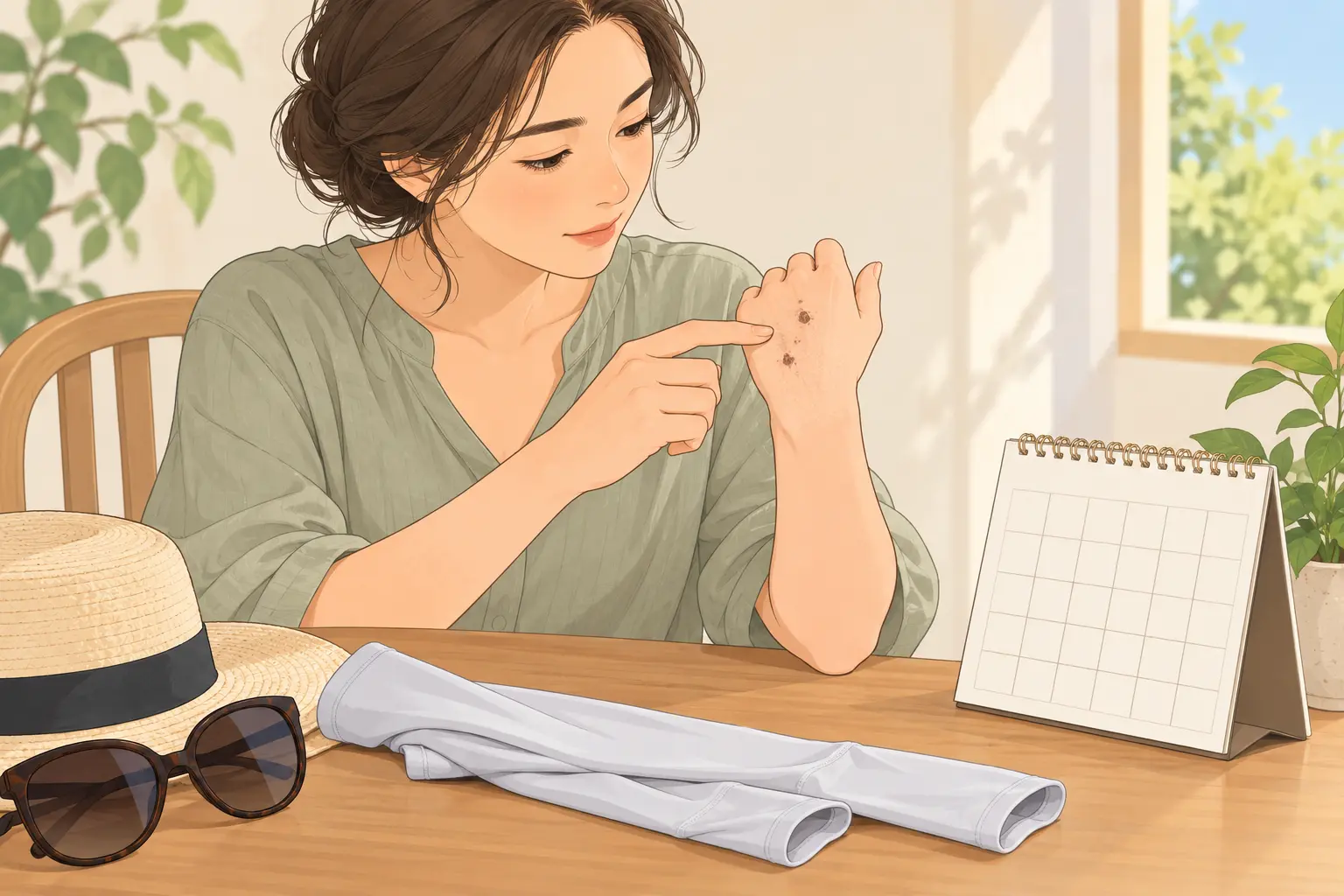
Diagnosis uses examination and, where needed, dermoscopy or biopsy. Confirm the actual device, pulse, area, eye protection and aftercare. Lesions may temporarily darken or crust afterward. Do not pick crusts; follow instructed cleansing, moisturising, wound care and light protection. Recovery varies between face and hands and by lesion extent; allow for photography, swimming, strong sunlight and a follow-up visit before departure.
Adverse effects, contraindications and precautions
Pain, swelling, blisters, burns, infection, scarring, hypopigmentation and PIH are possible. A 2024 study of Q-switched 532nm also addressed PIH risk and prevention, but does not justify everyone self-applying a particular preventive cream. Worsening pain, heat, pus or blisters require assessment. Do not first erase suspected skin cancer with a laser; ensure thorough eye protection.
Comparing 532nm methods and pigment diagnoses
| Method | Main goal | Key differences and precautions |
|---|---|---|
| 532nm picosecond | Selected pigment treatment with short pulses | Results vary by model, skin colour and settings |
| 532nm Q-switched | High-power pulses in the nanosecond range | Consider PIH, crusting and epidermal injury risks |
| KTP systems | Optical method generating 532nm light | Check pulse characteristics and indications as well as wavelength |
| Melasma management | Management of a recurrent pigmentation disorder | Unlike removing a spot once; photoprotection is fundamental |
Questions and answers for a medical consultation
The answers below are literature-based consultation questions, not a clinician interview or individual diagnosis; actual medical review remains incomplete.
Q. Will skin be clear as soon as the crust falls off?
A. Early redness or colour changes may remain, or PIH may appear later; initial recovery differs from final assessment.
Q. Does picosecond treatment prevent pigmentation?
A. No. PIH is possible depending on wavelength, skin colour, settings, sunlight and aftercare.
Q. What should I ask when searching in Chinese for “pigment-spot laser treatment in Korea”?
A. Confirm the spot diagnosis, actual wavelength, device and pulse, possible crusting and PIH, contact for follow-up after returning home, and interpreting availability.
Evidence sources and full text
Comparative trial of 532nm picosecond and Q-switched Nd:YAG for solar lentigines (https://pubmed.ncbi.nlm.nih.gov/33911703/), original article (https://pmc.ncbi.nlm.nih.gov/articles/PMC7992642/), 2024 randomized study of PIH risk after Q-switched 532nm (https://pubmed.ncbi.nlm.nih.gov/39265567/) were consulted. Evidence checked on 2026-10-05. Device, effect or downtime was not assumed from wavelength alone.
SEOLREIM’s principle of consultations and procedures performed personally by the director
SEOLREIM Clinic describes its principles of consultations and procedures performed personally by the clinic director, genuine products, appropriate quantities and attentive care. Consultation starts by distinguishing skin condition and goals, then checking the products and equipment actually available, approved uses, the dose or energy plan, recovery and risks. For signature whitening and brightening programs, the clinic director distinguishes melasma, solar lentigines and PIH. Confirm the 532nm mode of equipment actually available, Korean approval and treatment plan when booking and at examination.
Booking, language, and location information for overseas visitors
Visitors seeking laser or pigmentation treatment in Korea should report plans for sightseeing in strong sunlight, swimming and departure, to arrange crust care and PIH follow-up. SEOLREIM Clinic is approximately 1 minute from Exit 3 of Gangnam Station, on the 11th floor of the Gangnam 8258 Building. You can book through the website’s KakaoTalk consultation, Naver booking or telephone channels. Overseas visitors comparing dermatology clinics in Gangnam, Seoul, the Gangnam Station area or Korea should prepare details of medications, allergies, recent procedures and departure dates. When booking, state your preferred language, such as Japanese, Chinese, Arabic, Mongolian or Indonesian, and whether you need an interpreter, to confirm the actual scope and cost of support. Continuous consultation availability in each language and same-day procedures cannot be confirmed. Also agree on contact arrangements for adverse reactions after returning home and the follow-up schedule during consultation.
Authorship, review and dates
Author: SEOLREIM content editor / Medical-professional review: completed / Review confirmed: 2026-10-23 / Published: 2026-10-05 / Updated: 2026-10-27. This is general medical information and does not replace individual diagnosis or a procedural prescription.
SEOLREIM · GANGNAM, SEOUL
Discuss Skin Treatments in Seoul with Seolreim Clinic.
SEOLREIM Clinic provides consultations and procedures personally performed by the clinic director, following its principles of genuine products, appropriate quantities and attentive care.
Tell us your treatment interests, skin concerns, dates in Korea and preferred consultation language. Confirm treatment suitability, recovery plans and language support before booking.