SEOLREIM · JOURNAL
Nose filler vascular occlusion and vision damage: safety criteria to check before effects
Full translation of the Korean article. Translation checked for completeness, numerical consistency and medical meaning; separate medical review of this translation is pending. Translation updated: 2026-10-28.
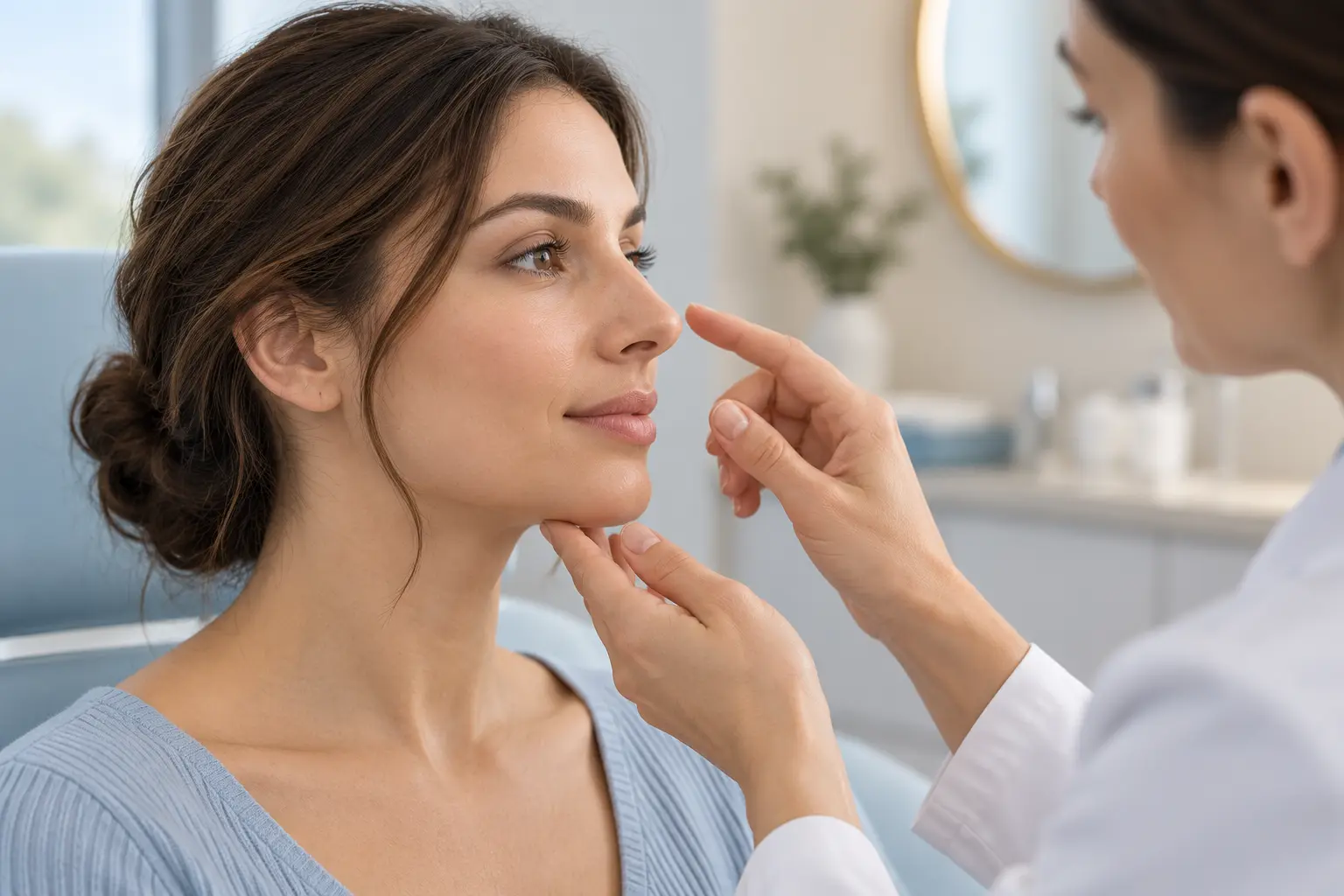
Nose filler may offer limited enhancement of the bridge or specific contours, but the nose is a high-risk area with vascular connections to the eye’s circulation. Rare skin necrosis, retinal artery occlusion and permanent vision damage have been reported. Neither cannulas, small-volume injection, aspiration nor ultrasound reduce risk to 0; product and anatomical planning and immediate-response systems must be checked before effects.
Definition, benefits and precautions at a glance
| Category | What to check |
|---|---|
| Possible goals | Limited volume enhancement of the bridge and contours |
| What it cannot do | Cannot alter nasal bone or cartilage structure and function as surgery can |
| Common reactions | Swelling, bruising, tenderness, asymmetry and unevenness |
| Serious risks | Vascular occlusion, skin necrosis, vision damage and rare cerebrovascular complications |
| Emergency signs | Severe pain, pallor/blue discoloration, mottled pattern, blurred/double vision and eyelid droop |
Definitions and how the treatments work
Filler adds soft-tissue volume, but excessive pressure or intravascular injection in the nose’s small space can block tissue blood flow. Facial vessels connect with orbital vessels, allowing retrograde emboli to affect eye circulation. HA filler can be treated with an attempt at hyaluronidase breakdown, but this neither prevents injury nor guarantees vision recovery. Materials such as CaHA, PLLA and silicone do not dissolve in the same way.
Potential benefits and limitations
In suitable candidates, small bridge depressions or surface contours may be enhanced, but treatment does not substantially raise the tip, narrow broad bones or correct septal or breathing problems. Literature on filler-related vision damage repeatedly identifies the nose as high risk. Case-report-based evidence makes precise individual incidence difficult to determine; “very rare” does not mean emergency response can be omitted.
Suitable candidates and preliminary assessment
Adults seeking minor contour enhancement who understand the limits may consult. Report previous nasal fillers, threads, implants or surgery, unknown injectables, scars, thin skin, recurrent swelling or infection, autoimmune disease, immunosuppression, medicines increasing bleeding risk, pregnancy and breastfeeding. Functional problems, major structural changes, infection, inflammation or unclear prior material warrant considering specialist nasal evaluation and imaging or ultrasound before new injection.
Procedure, recovery and preparation
Assess skin, surgical history and existing filler location from frontal, lateral and basal views; obtain explanations of the actual product, approved uses, total amount, injection plan and emergency kit. Ultrasound may help identify some vessels and prior filler, but cannot guarantee identification of every small vessel or variation. Do not travel long distances alone afterward; monitor vision, skin colour and pain, and ensure immediate contact arrangements.

Adverse effects, contraindications and precautions
Besides swelling, bruising, tenderness, asymmetry, infection, nodules and migration, vascular occlusion may cause skin pallor, mottling, blisters or necrosis. Blurred vision, visual-field loss, double vision, eye pain, eyelid droop, severe headache, nausea or neurological symptoms need emergency medical assessment rather than waiting only for the clinic’s reply. Late-detected vision damage may have limited recovery, making time-dependent response critical.
Differences between nose fillers, threads and surgical rhinoplasty
| Method | Main goal | Key differences and precautions |
|---|---|---|
| HA fillers | Minor volume and surface-contour enhancement | Vascular occlusion risk; enzymatic breakdown may be attempted if needed |
| Non-HA fillers | Product-specific volume and collagen responses | Not immediately broken down enzymatically like HA |
| Nasal threads | Limited contour-support goal | Extrusion, infection, visibility, scarring and interaction with prior fillers |
| Rhinoplasty surgery | Can correct bone, cartilage and septal structure | Anaesthesia, bleeding, infection, scarring, functional changes and prolonged recovery |
Questions and answers for a medical consultation
The answers below are literature-based consultation questions, not a clinician interview or individual diagnosis; actual medical review remains incomplete.
Q. Does a cannula eliminate blindness risk?
A. It may be an option to reduce vessel injury, but cannot fully eliminate vessel entry or embolism risk.
Q. Is it safe if hyaluronidase is available?
A. It is a response option for attempting HA breakdown, but does not guarantee prevention of vascular occlusion or vision recovery.
Q. Can I wait if skin turns white after treatment?
A. Severe pain, pallor, blue discoloration and mottling may indicate impaired blood flow and require immediate assessment.
Evidence sources and full text
FDA Dermal Fillers safety information (https://www.fda.gov/medical-devices/aesthetic-cosmetic-devices/dermal-fillers-soft-tissue-fillers), updated literature on filler-related vision damage (https://pubmed.ncbi.nlm.nih.gov/30805636/), systematic review of vision damage from HA fillers (https://pubmed.ncbi.nlm.nih.gov/31822960/), review of ocular complications (https://pubmed.ncbi.nlm.nih.gov/31709739/) were consulted. Evidence checked on 2026-10-04.
SEOLREIM’s principle of consultations and procedures performed personally by the director
SEOLREIM Clinic describes its principles of consultations and procedures performed personally by the clinic director, genuine products, appropriate quantities and attentive care. Consultation starts by distinguishing skin condition and goals, then checking the products and equipment actually available, approved uses, the dose or energy plan, recovery and risks. For nose filler, the clinic director personally checks surgery, prior injectables and skin thickness and plans using genuine products, appropriate quantities and attentive care. Confirm the actual product, ultrasound availability, emergency protocol and scope of signature nose programs at examination.
Booking, language, and location information for overseas visitors
Visitors seeking nose filler in Korea or cosmetic dermatology in Seoul should prioritise product records, immediate emergency response, the referral hospital for visual symptoms, observation before departure and contact after returning home over price. SEOLREIM Clinic is approximately 1 minute from Exit 3 of Gangnam Station, on the 11th floor of the Gangnam 8258 Building. You can book through the website’s KakaoTalk consultation, Naver booking or telephone channels. Overseas visitors comparing dermatology clinics in Gangnam, Seoul, the Gangnam Station area or Korea should prepare details of medications, allergies, recent procedures and departure dates. When booking, state your preferred language, such as Japanese, Chinese, Arabic, Mongolian or Indonesian, and whether you need an interpreter, to confirm the actual scope and cost of support. Continuous consultation availability in each language and same-day procedures cannot be confirmed. Also agree on contact arrangements for adverse reactions after returning home and the follow-up schedule during consultation.
Authorship, review and dates
Author: SEOLREIM content editor / Medical-professional review: completed / Review confirmed: 2026-10-23 / Published: 2026-10-04 / Updated: 2026-10-27. This is general medical information and does not replace individual diagnosis or a procedural prescription.
SEOLREIM · GANGNAM, SEOUL
Discuss Skin Treatments in Seoul with Seolreim Clinic.
SEOLREIM Clinic provides consultations and procedures personally performed by the clinic director, following its principles of genuine products, appropriate quantities and attentive care.
Tell us your treatment interests, skin concerns, dates in Korea and preferred consultation language. Confirm treatment suitability, recovery plans and language support before booking.