SEOLREIM · JOURNAL
Does oral glutathione lighten skin? Limits of evidence, dosage and side-effect data
Full translation of the Korean article. Translation checked for completeness, numerical consistency and medical meaning; separate medical review of this translation is pending. Translation updated: 2026-10-28.
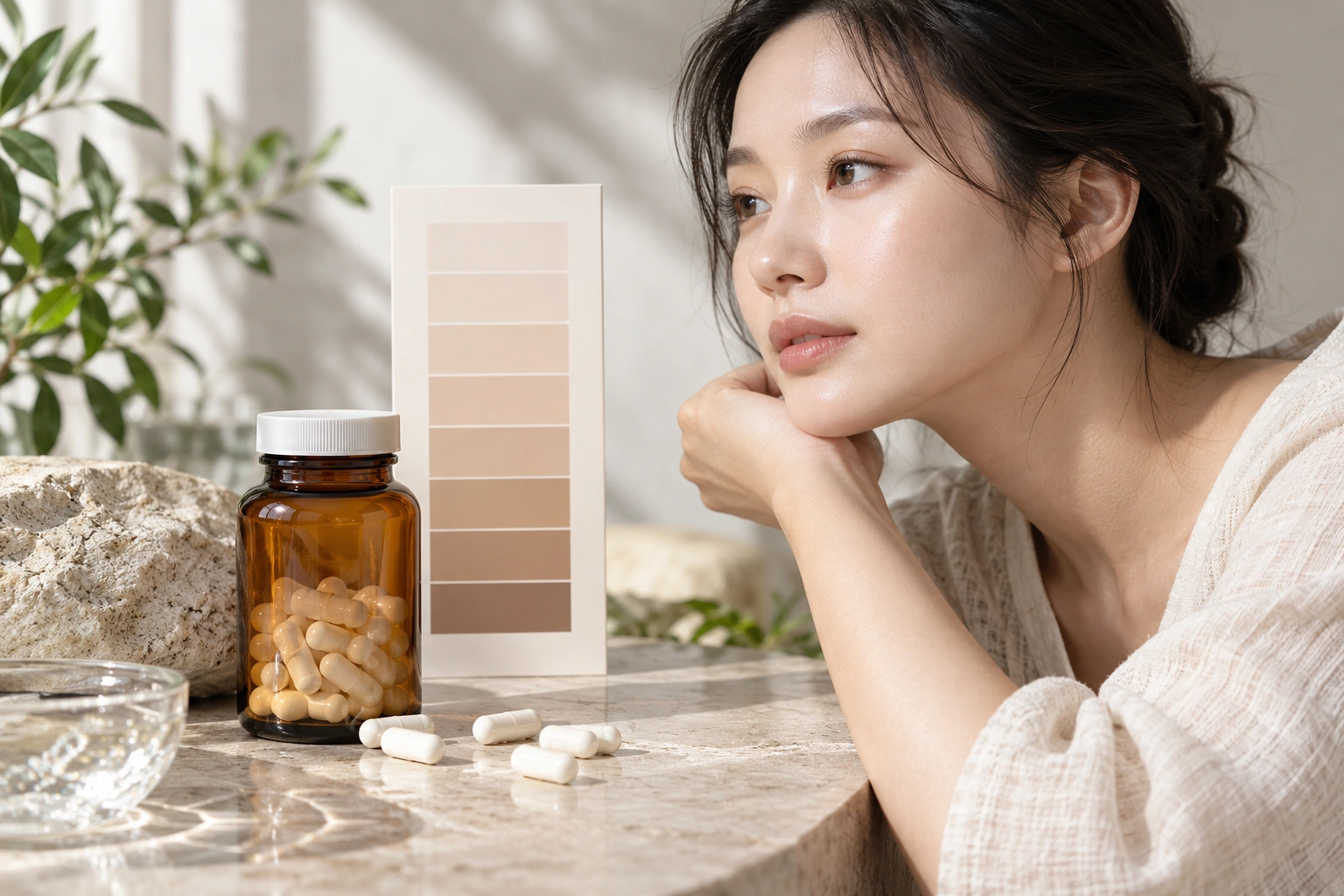
Some small studies found lower melanin measures in particular areas with oral glutathione, but differences in study quality, formulation, dose and duration prevent firm conclusions about whole-body skin-tone changes or melasma treatment. Even if effective, persistence after stopping is uncertain; oral supplements should not be regarded as the same treatment as high-dose intravenous injections. Diagnosis and sunscreen come first for melasma and pigment spots.
Definition, benefits and precautions at a glance
| Category | What to check |
|---|---|
| Evidence | Melanin-measure changes in some small studies; overall conclusions uncertain |
| Limitations | Whole-body lightening, permanent effects or melasma cure cannot be guaranteed |
| Product differences | Reduced, oxidised, sublingual and other forms differ in content and quality |
| Side effects | Possible gastrointestinal discomfort or rash; limited long-term high-dose data |
| Cautions | Pregnancy, breastfeeding, chronic conditions, cancer treatment and medications require clinician review |
Definitions and how the treatments work
Glutathione participates in bodily redox and antioxidant processes, with a hypothesis that it can affect melanin-synthesis pathways. However, how much oral intake is used in skin tissue and how blood changes relate to actual clinical skin tone vary by formulation and study. Small statistical changes in melanin measures do not equal visible uniform lightening or disease treatment.
Potential benefits and limitations
A 2019 systematic review considered efficacy uncertain because results were inconsistent and study quality low. A 2025 review discussed moderate potential for oral and topical forms but highlighted durability, cost and bias concerns, opposing intravenous use because of insufficient efficacy and safety issues. Skin colour itself is not a disease; melasma, post-inflammatory pigmentation and solar lentigines need different treatments.
Suitable candidates and preliminary assessment
Adults considering supplements should first distinguish changing normal skin tone from treating melasma or spots. Report pregnancy, breastfeeding, asthma, liver or kidney disease, cancer or immune therapy, other antioxidants or supplements and allergies. Overseas online purchases make labelled content, impurities and undeclared medicines difficult to verify; beware exaggerated claims of rapid colour change.
Procedure, recovery and preparation
Record product name, ingredients, intake per 1 day, duration and adverse reactions; do not stop prescriptions independently. For pigment concerns, photograph under consistent lighting and review sunscreen, photosensitising medicines and hormonal factors together. Stop and consult for abdominal pain, nausea or rash; breathlessness, generalized hives or lip swelling require emergency care.
Adverse effects, contraindications and precautions
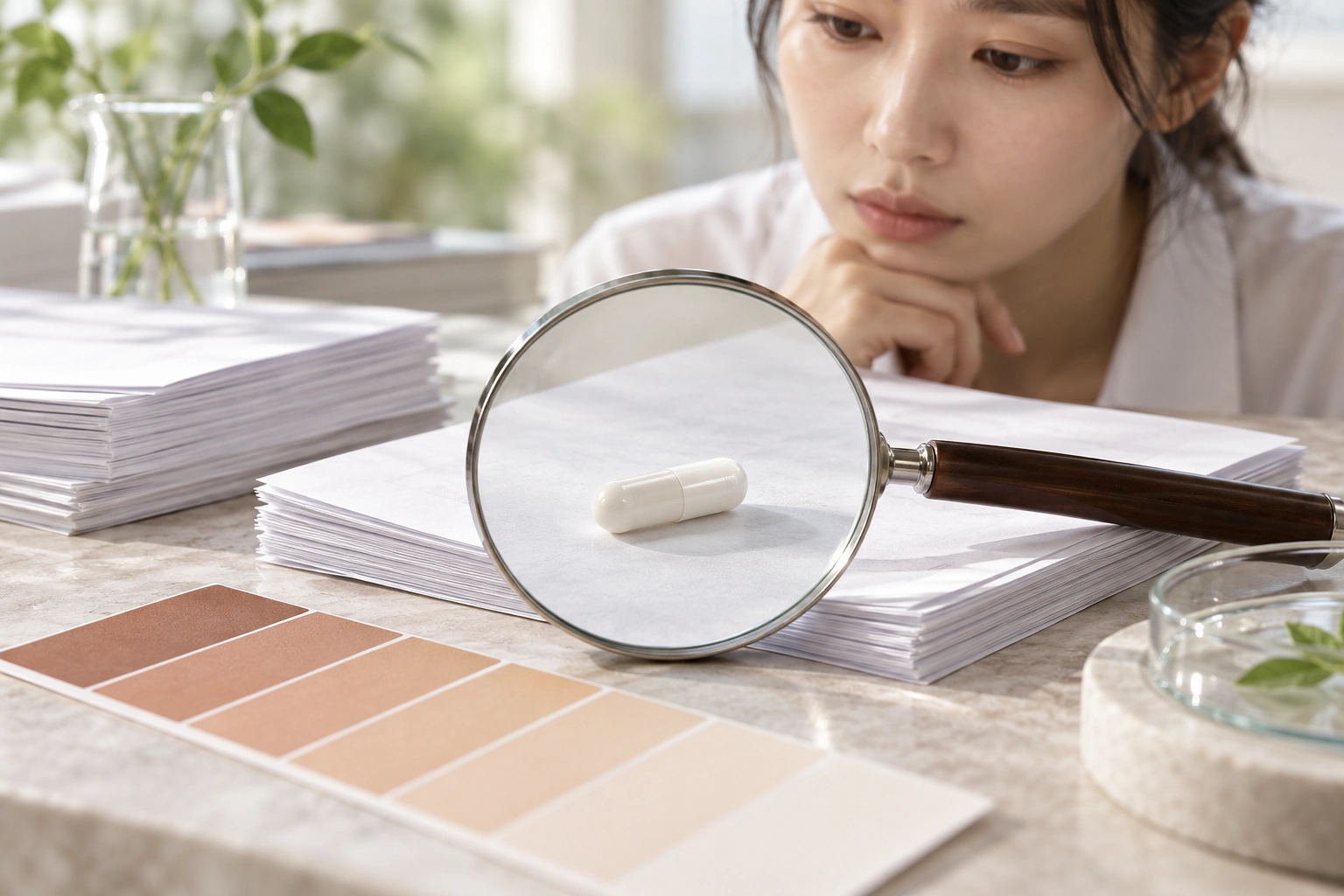
Oral studies reported relatively mild adverse reactions such as gastrointestinal discomfort and rash, but long-term high-dose safety data are limited. Supplement quality controls and permitted claims vary by country. Intravenous glutathione differs from oral exposure and risks, with reports of kidney or liver injury, severe skin reactions, anaphylaxis and regulatory warnings; it cannot be described as a safe alternative for lightening.
Differences between oral, topical and intravenous glutathione and pigment treatment
| Method | Main goal | Key differences and precautions |
|---|---|---|
| Oral supplement | Limited research after systemic intake | Uncertain consistency, formulation effects and long-term safety |
| Topical cosmetics | Local skin-surface use | Check absorption, stability, content and cosmetic regulations |
| Intravenous injection | High-dose intravascular exposure | Insufficient lightening evidence and serious safety concerns |
| Standard melasma management | Diagnosis, light protection, sunscreen and medical treatment | Recurrence management and individual prescribing needed |
Questions and answers for a medical consultation
The answers below are literature-based consultation questions, not a clinician interview or individual diagnosis; actual medical review remains incomplete.
Q. How many shades lighter will oral use make my skin?
A. Evidence cannot predict or guarantee that degree of change. Changes in some study measures do not equal visible whole-body changes in an individual.
Q. Are oral products safer than “white jade” injections?
A. Administration routes and risks differ. Oral use also requires checks of quality, medications and conditions; it does not guarantee effects as an alternative to intravenous injections.
Q. Can I take it instead of melasma medication?
A. Melasma needs diagnosis and management of UV, hormones and irritation; do not replace prescribed treatment with supplements.
Evidence sources and full text
Systematic review of clinical evidence for oral glutathione (https://pubmed.ncbi.nlm.nih.gov/30895708/), 2025 review of glutathione for lightening and melasma (https://pubmed.ncbi.nlm.nih.gov/39444151/), risk–benefit review of oral glutathione (https://pmc.ncbi.nlm.nih.gov/articles/PMC7196133/) were consulted. Evidence checked on 2026-10-03. Small studies were not generalised into dosage prescriptions or permanent lightening effects.
SEOLREIM’s principle of consultations and procedures performed personally by the director
SEOLREIM Clinic describes its principles of consultations and procedures performed personally by the clinic director, genuine products, appropriate quantities and attentive care. Consultation starts by distinguishing skin condition and goals, then checking the products and equipment actually available, approved uses, the dose or energy plan, recovery and risks. Signature whitening and brightening consultations distinguish melasma, solar lentigines, post-inflammatory pigmentation and normal skin tone. Confirm actual oral or intravenous glutathione availability, product, dose and approved uses before booking.
Booking, language, and location information for overseas visitors
Visitors seeking pigmentation treatment in Korea should share supplements, medicines and whether melasma or spots have been diagnosed; do not commit to excessive intake or injection packages within a short trip. SEOLREIM Clinic is approximately 1 minute from Exit 3 of Gangnam Station, on the 11th floor of the Gangnam 8258 Building. You can book through the website’s KakaoTalk consultation, Naver booking or telephone channels. Overseas visitors comparing dermatology clinics in Gangnam, Seoul, the Gangnam Station area or Korea should prepare details of medications, allergies, recent procedures and departure dates. When booking, state your preferred language, such as Japanese, Chinese, Arabic, Mongolian or Indonesian, and whether you need an interpreter, to confirm the actual scope and cost of support. Continuous consultation availability in each language and same-day procedures cannot be confirmed. Also agree on contact arrangements for adverse reactions after returning home and the follow-up schedule during consultation.
Authorship, review and dates
Author: SEOLREIM content editor / Medical-professional review: completed / Review confirmed: 2026-10-23 / Published: 2026-10-03 / Updated: 2026-10-27. This is general medical information and does not replace individual diagnosis or a procedural prescription.
SEOLREIM · GANGNAM, SEOUL
Discuss Skin Treatments in Seoul with Seolreim Clinic.
SEOLREIM Clinic provides consultations and procedures personally performed by the clinic director, following its principles of genuine products, appropriate quantities and attentive care.
Tell us your treatment interests, skin concerns, dates in Korea and preferred consultation language. Confirm treatment suitability, recovery plans and language support before booking.