SEOLREIM · JOURNAL
Glycolic Acid Peel: Effects, Recovery, and Pigmentation—What to Check Before Autumn Melasma Care
Full professional English translation completed and self-reviewed against the Korean source; numerical tokens and medical cautions preserved; separate medical review of this translation is pending. Translation updated: 2026-10-28.
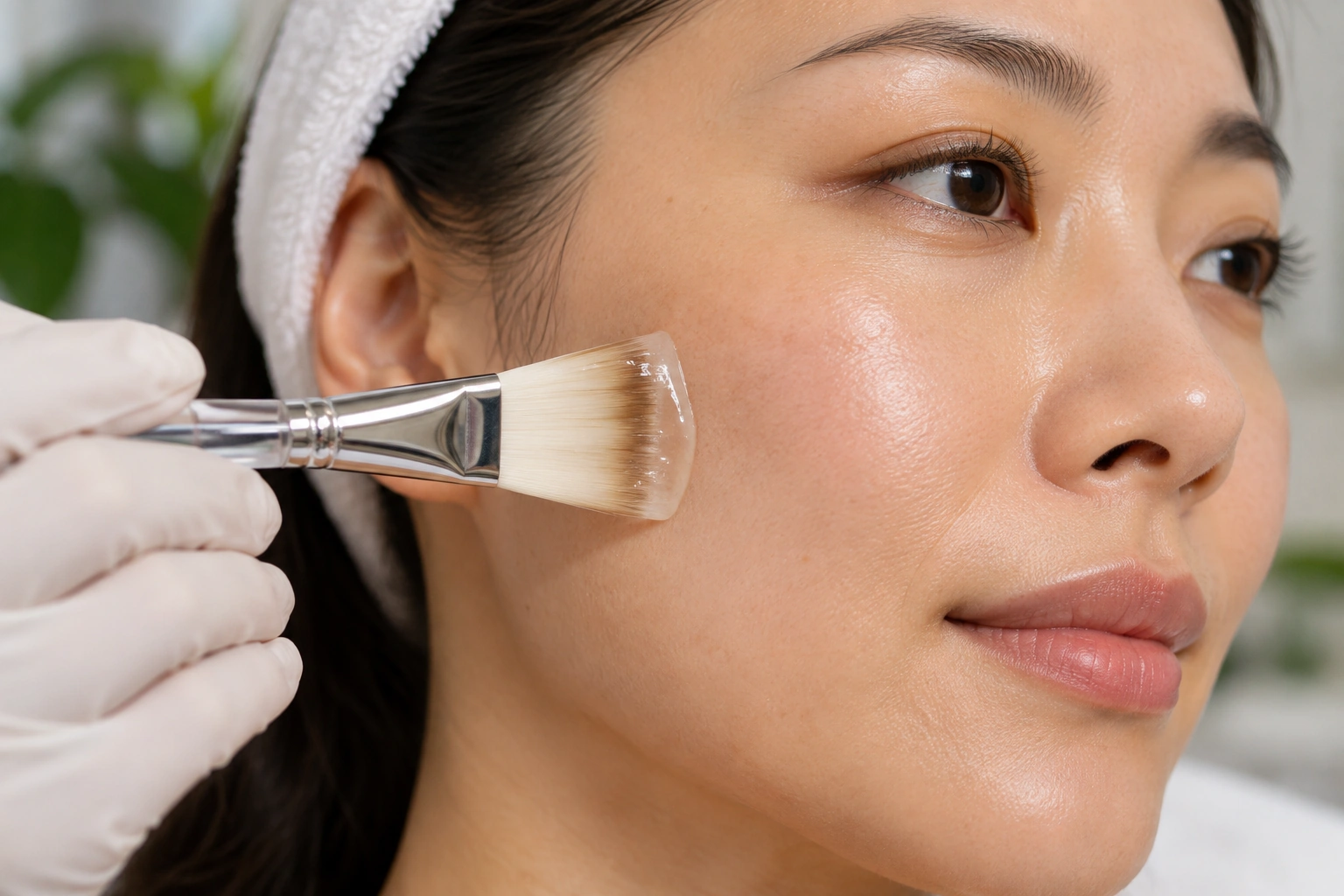
A glycolic acid peel is a chemical peel that uses an AHA acid to promote shedding of the outer skin layers and manage rough texture and some superficial pigmentation. It does not cure melasma or change a person's inherent skin color. Sun protection and irritation control are still necessary in autumn, and not only concentration but also pH, formulation, and contact time determine injury and recovery.
Definition, benefits and precautions at a glance
| Category | What to check |
|---|---|
| Definition | Chemical peeling with the AHA glycolic acid |
| Goal | Adjunctive management of scale, texture, and some superficial pigmentation |
| Recovery | After a superficial peel, redness and flaking may last several days to about 1 week; recovery increases with depth |
| Limitations | Does not resolve deep pigmentation, recurrent melasma, or deep scars in a single treatment |
| Cautions | Barrier damage, excessive irritation, and post-inflammatory hyperpigmentation |
Definitions and how the treatments work
Glycolic acid is an acid that affects cohesion between corneocytes and epidermal turnover. Even at the same labeled concentration, the response varies with free-acid content, buffering, pH, application amount, overlap, and contact time. An in-office peeling solution and low-concentration home care must not be used in the same way, and this article is not an instruction for preparing or applying a high-concentration peel at home.
Potential benefits and limitations
It may help surface roughness and some pigmentation, but melasma is chronic and recurrent, so treatment goals are often divided among sun protection, topical medication, and other methods. More visible peeling does not mean greater treatment success, and excessive inflammation can darken pigmentation. If autumn dryness has weakened the skin barrier, moisturizing and treating dermatitis should take priority over increasing peel strength.
Suitable candidates and preliminary assessment
It may be considered for people with surface roughness, scale, or superficial pigmentation whose inflammation is stable. Disclose active dermatitis, infection, wounds, herpes, a history of keloids or pigmentation, recent laser treatment, peeling or waxing, and use of isotretinoin, retinoids, or other medications and products. Discuss pregnancy, breastfeeding, anticipated light exposure, and risk related to skin tone. Do not decide a discontinuation period yourself; follow the clinician's instructions.
Procedure, recovery and preparation
Melasma, post-inflammatory pigmentation, and other lesions should be distinguished, and the skin barrier, irritating products, and sun exposure should be reviewed. Cleansing, protecting selected areas, application, observing the response, appropriate removal or neutralization, moisturizing, and aftercare follow in sequence. After a superficial peel, redness, tightness, and flaking may last several days to about 1 week, but can persist longer depending on depth and combined procedures. Do not pick peeling skin, and obtain separate instructions on when to resume makeup, retinoids, and exfoliation.

Adverse effects, contraindications and precautions
In addition to stinging, burning, redness, dryness, and flaking, possible adverse effects include chemical burns, infection, herpes reactivation, persistent redness, hyperpigmentation, and rare scarring. Skin that pigments easily after irritation should be treated in stages. Severe pain, blisters, oozing, or spreading redness should not be dismissed as normal peeling and requires medical care. A hat, shade, sunscreen, and moisturization remain important after recovery.
Differences among glycolic acid, salicylic acid, TCA, and pigment lasers
| Method | Main goal | Key differences and precautions |
|---|---|---|
| Glycolic acid AHA | Adjunctive care for surface scale, texture, and pigmentation | Response varies with concentration, pH, and time |
| Salicylic acid BHA | Used for goals related to sebum and comedones | Separate risks related to the ingredient, formulation, and dermatitis |
| TCA peel | Used according to goals such as peel depth and localized scars | Cannot be compared with glycolic acid as if it had the same strength |
| Pigment laser | Targets pigment according to wavelength | Melasma may worsen and PIH may occur; diagnosis comes first |
Questions and answers for a medical consultation
The answers below are consultation questions organized from the literature. They are not a clinician interview or an individual diagnosis, and medical review of this translation is still pending.
Q. Is a strong peel safe simply because it is autumn?
A. The season alone does not make it safe. Dryness, irritation, sun exposure, and skin tone must all be assessed.
Q. Will melasma disappear after one treatment?
A. Melasma can recur and may not resolve with surface treatment alone.
Q. Is the peel a failure if the skin does not visibly flake?
A. The amount of visible shedding does not directly indicate efficacy; results are assessed according to the skin condition and treatment goal.
Evidence sources and original texts
Sharad J. Glycolic acid peel therapy—A current review. 2013 (https://pmc.ncbi.nlm.nih.gov/articles/PMC3875240/) summarizes differences in formulation, concentration, pH, and time. AAD Chemical peels FAQs (https://www.aad.org/public/cosmetic/younger-looking/chemical-peels-faqs) and Preparation (https://www.aad.org/public/cosmetic/younger-looking/chemical-peels-preparation) were consulted for recovery by peel depth, consultation, and aftercare. Evidence checked on 2026-10-01. A single recovery period was not applied to every glycolic acid peel.
SEOLREIM's principle of consultation and treatment directly by the clinic director
SEOLREIM Clinic follows the principles of direct consultation and treatment by the clinic director and of authentic products, appropriate quantities, and attentive care. Consultation begins by distinguishing the skin condition and treatment goal, then reviewing the products and devices actually available, their authorized uses, the planned dose or energy, recovery, and risks. When comparing SEOLREIM's signature pigment-laser and brightening programs, consultation distinguishes melasma, superficial pigmentation, and skin-barrier problems. Whether peeling is offered, which agent is used, and whether treatment is performed alone or in combination are confirmed after examination; suitability is not determined by a package name alone.
Booking, language, and location information for international visitors
Visitors searching for chemical peel Korea or pigmentation treatment Korea should share their outdoor sightseeing and flight schedules, usual skin tone, and history of pigmentation after irritation so that moisturization and light-avoidance plans can be made for recovery. SEOLREIM Clinic is on the 11th floor of the Gangnam 8258 Building, about 1 minute from Exit 3 of Gangnam Station. Appointments can be requested through the KakaoTalk consultation, Naver booking, or telephone channels listed on the website. Visitors comparing information on a Gangnam skin clinic, Seoul skin clinic, Gangnam Station skin clinic, or Korean skin clinic should prepare a list of medications, allergies, recent procedures, and their departure schedule. At booking, state your preferred language, such as Japanese, Chinese, Arabic, Mongolian, or Indonesian, and whether interpretation is needed, then confirm the actual scope and cost of available support. Continuous consultation in every language and same-day treatment availability cannot be guaranteed. Also agree during consultation on how to report an adverse reaction after returning home and when follow-up should occur.
Authorship, review and dates
Written by: SEOLREIM Content Editor / Medical review: completed / Review confirmation date: 2026-10-23 / Published: 2026-10-01 / Updated: 2026-10-27. This is general medical information and does not replace an individual diagnosis or treatment prescription.
SEOLREIM · GANGNAM, SEOUL
Discuss Skin Treatments in Seoul with Seolreim Clinic.
Seolreim Clinic provides doctor-led consultation and treatment, following its principles of genuine products, accurate quantities and attentive care.
Tell us your treatment interests, skin concerns, dates in Korea and preferred consultation language. Confirm treatment suitability, recovery plans and language support before booking.