
SEOLREIM · JOURNAL
HIFEM and RF Muscle Body Contouring: Emsculpt Effects, Pain, and Contraindications
Full professional English translation completed and self-reviewed against the Korean source; numerical tokens and medical cautions preserved; separate medical review of this translation is pending. Translation updated: 2026-10-28.
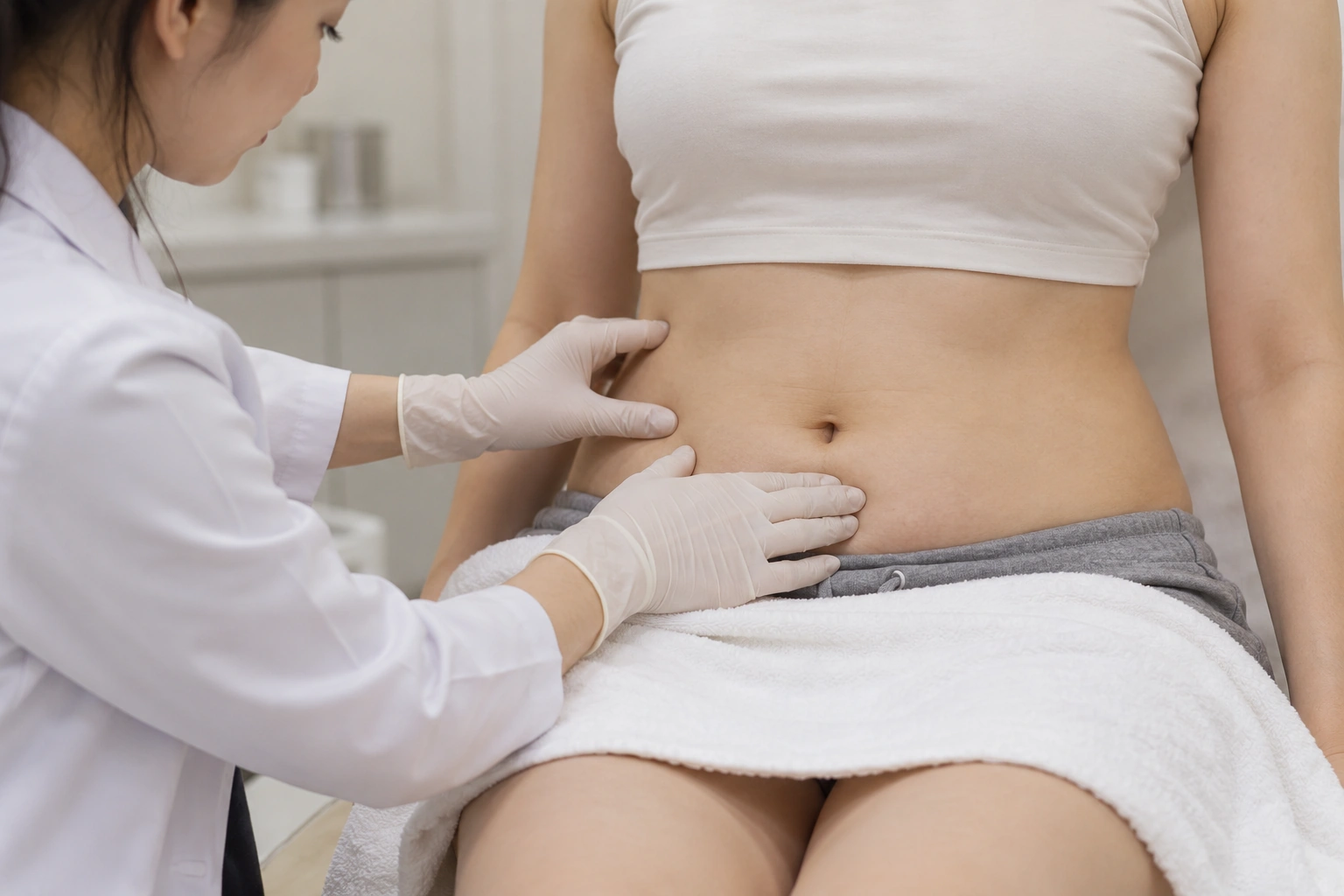
HIFEM body contouring uses a high-intensity focused electromagnetic field to induce repeated muscle contractions, and some devices simultaneously apply radiofrequency (RF) heating to improve muscle tone and the appearance of localized fat in areas such as the abdomen and buttocks. It is not a substitute for weight loss, treatment of obesity or visceral fat, or actual exercise, and changes in muscle and fat thickness reported in studies are not guaranteed to occur in everyone. Pain, muscle soreness, burns, and interference with metallic or electronic implants must be assessed.
Definition, effects and precautions at a glance
| Category | What to check |
|---|---|
| Energy | Muscle contractions induced by a focused electromagnetic field; some devices combine RF heating |
| Main goal | Adjunctive improvement of muscle tone and local contours in areas such as the abdomen and buttocks |
| Recovery | Muscle fatigue, pain, or a cramping sensation for several days; warmth and redness from RF are possible |
| Limitations | Not a substitute for weight loss, treatment of visceral fat or obesity, or exercise |
| Main risks | Pain, muscle injury, burns, interference with electronic devices, and aggravation of a hernia |
Definition and mechanism
A time-varying magnetic field stimulates motor nerves to create repeated muscle contractions that are difficult to sustain voluntarily, while devices with simultaneous RF raise tissue temperature to induce responses in muscle and subcutaneous fat. Magnetic-field strength and pattern, RF temperature, treatment area, and authorized purpose differ by device. Electrical muscle stimulation (EMS) pads and HIFEM deliver energy differently, and the advertising phrase 'tens of thousands of sit-ups' does not directly represent a clinical outcome.
Potential benefits and limitations
Systematic reviews and some imaging studies have reported increased abdominal muscle thickness and decreased subcutaneous-fat thickness after HIFEM alone or combined with RF. However, samples are small, many studies are manufacturer-supported, and long-term durability and independent comparisons are limited. It cannot replace a weight-management program that meaningfully improves body fat, waist circumference, strength, and health measures.
Who may be suitable and when to avoid treatment
Candidates are adults with relatively stable weight who maintain exercise and healthy habits and seek adjunctive improvement of muscle tone and contours in a specific area. A pacemaker, defibrillator, neurostimulator, metallic or electronic implant, pregnancy, epilepsy, heart disease, a hernia or recent surgery in the treatment area, infection, muscle injury, or reduced sensation requires contraindication screening or separate assessment.
Procedure and expected recovery period
The clinic director assesses fat, muscle, skin laxity, edema, hernia, and implants, then determines the device name, authorized area, intensity, RF temperature, and number of sessions. Strong repeated contractions, pulling, and warmth occur during treatment, and muscle soreness, fatigue, or cramping similar to that after exercise may last several days. Ask for guidance on hydration and resuming exercise. Results are assessed over several weeks to months using the same posture, lighting, circumference measurements, or imaging.
Side effects, contraindications and warning signs
In addition to temporary muscle soreness, fatigue, cramping, and redness, possible problems include intolerable pain, muscle injury, RF burns or blisters, sensory changes, and discomfort at a hernia or surgical site. Magnetic fields can affect electronic implants such as pacemakers and metallic objects. Severe muscle pain and weakness, red or brown urine, chest pain, palpitations, or blisters require immediate assessment.
Differences among HIFEM, exercise, fat reduction, and liposuction
| Method | Main goal | Key differences and precautions |
|---|---|---|
| HIFEM±RF | Muscle contraction and some fat and thermal responses | Implant contraindications, muscle soreness, and burns; not weight loss |
| Strength training | Improves whole-body strength, metabolism, and function | Requires consistent loading, recovery, and nutrition |
| Cooling, laser, or ONDA | Reduction in the appearance of localized subcutaneous fat | Muscle strengthening is not the primary goal |
| Liposuction | Physically removes fat | Risks involving anesthesia, bleeding, infection, embolism, and contour irregularity |

Medical Q&A
Q. Does Emsculpt replace exercise?
A. It induces contractions in a specific area but cannot replace exercise that supports cardiovascular, skeletal, and metabolic health.
Q. Will I lose weight?
A. It targets local appearance and does not guarantee reduction in weight or visceral fat.
Q. Can it be performed after abdominal surgery?
A. Metallic materials, sutures, hernia, and recovery status must be reviewed, and the surgeon should be consulted.
References
Systematic review of HIFEM alone and combined with RF (https://pubmed.ncbi.nlm.nih.gov/37957393/), systematic review of electromagnetic body treatment (https://pubmed.ncbi.nlm.nih.gov/36688862/), US FDA guidance on noninvasive body contouring (https://www.fda.gov/medical-devices/aesthetic-cosmetic-devices/non-invasive-body-contouring-technologies), and safety guidance on electrical muscle stimulators (https://www.fda.gov/medical-devices/consumer-products/electronic-muscle-stimulators).
SEOLREIM's principle of consultation and treatment directly by the clinic director
SEOLREIM Clinic does not recommend HIFEM treatment based only on advertising phrases such as 'tens of thousands of exercises.' The clinic director directly assesses fat, muscle, edema, skin laxity, hernia, and implants, compares 2 to 3 appropriate options among actually available signature body programs such as HIFEM and RF, ONDA, body InMode, cooling, and fat-dissolving injections, and performs treatment according to the principles of authentic products, appropriate quantities, and attentive care.
Information for international visitors
Visitors searching for body contouring Korea or medical tourism Korea should disclose a pacemaker, metal, abdominal surgery, hernia, exercise habits, and a plan for managing muscle soreness or burns after returning home. SEOLREIM Clinic is on the 11th floor of the Gangnam 8258 Building, about 1 minute from Exit 3 of Gangnam Station. Appointments can be requested through the KakaoTalk consultation, Naver booking, or telephone channels listed on the website. International visitors comparing a Gangnam skin clinic, Seoul skin clinic, Gangnam Station skin clinic, or Korean skin clinic should prepare their passport, allergies, medications, recent-procedure records, and departure schedule, and should confirm the available consultation language and scope of interpretation support before booking. Depending on the examination, same-day treatment may be difficult or follow-up after returning home may be required.
Author, reviewer, publication date and update date
Written by: SEOLREIM Content Editor / Medical review: completed / Review confirmation date: 2026-10-23 / Published: 2026-09-30 / Updated: 2026-10-27. This is general medical information and does not replace an individual diagnosis or treatment prescription.
SEOLREIM · GANGNAM, SEOUL
Discuss Skin Treatments in Seoul with Seolreim Clinic.
Seolreim Clinic provides doctor-led consultation and treatment, following its principles of genuine products, accurate quantities and attentive care.
Tell us your treatment interests, skin concerns, dates in Korea and preferred consultation language. Confirm treatment suitability, recovery plans and language support before booking.