SEOLREIM · JOURNAL
Glutathione Whitening Injections: Evidence of Effect and Kidney and Allergy Risks
Full professional English translation completed and self-reviewed against the Korean source; numerical tokens and medical cautions preserved; separate medical review of this translation is pending. Translation updated: 2026-10-28.
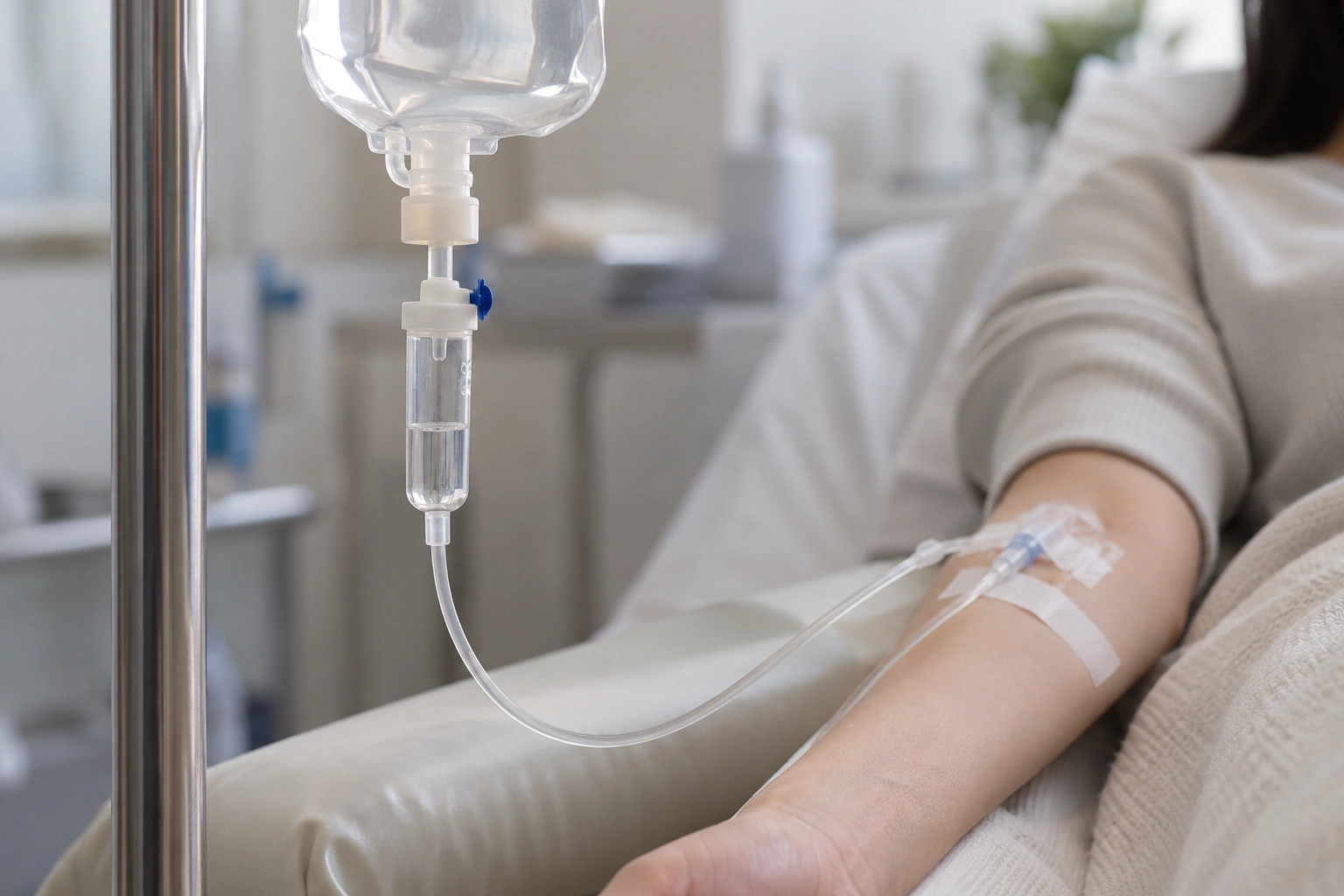
An intravenous glutathione injection, sometimes marketed as a whitening injection, administers an antioxidant into a vein, but long-term, high-quality evidence and a standard dose supporting skin-lightening effects are lacking. It should not be regarded as an authorized universal whitening injection that treats melasma or dark spots. Injection-related infection, phlebitis, severe allergic reactions, and possible kidney or liver abnormalities must be considered. Even if skin-tone change occurs, durability cannot be guaranteed unless sun exposure and causes of melasma are addressed.
Definition, effects and precautions at a glance
| Category | What to check |
|---|---|
| Ingredient and route | Intravenous administration of the antioxidant glutathione |
| Level of evidence | Insufficient evidence for long-term skin-lightening effects and a standard dose |
| Limitations | Does not directly diagnose or treat the causes of melasma, solar lentigines, or PIH |
| Recovery | Injection pain, bruising, and venous irritation; systemic abnormalities must be monitored |
| Main risks | Anaphylaxis, infection, kidney or liver abnormalities, and drug interactions |
Definition and mechanism
Glutathione participates in redox processes in the body and may influence melanogenesis pathways. However, a higher blood concentration does not mean clinically safe and lasting skin lightening. Oral, topical, and intravenous routes differ in absorption, dose, and risk, and product manufacturing, sterility, and mixed ingredients must also be checked.
Potential benefits and limitations
Small studies have reported changes in melanin measures after oral, topical, or intravenous glutathione, but study periods were short, designs were limited, and long-term safety data for intravenous use are insufficient. A systemic 'tone-up' effect that does not distinguish melasma, freckles, and post-inflammatory hyperpigmentation is difficult to predict objectively, and persistence after discontinuation has not been established.
Who may be suitable and when to avoid treatment
For pigmentation concerns, melasma, solar lentigines, PIH, medication-related causes, and endocrine causes should be diagnosed before considering an injection. Particular caution is needed with kidney or liver disease, asthma or severe allergy, pregnancy or breastfeeding, chemotherapy or immunotherapy, combination with multiple nutrient injections, allergy to injectable ingredients, or a risk of infection at vascular access.
Procedure and expected recovery period
A clinician should assess the skin lesion, systemic history, medications, and allergies and explain the actual product, ingredients, dose, mixture, and authorized purpose. Aseptic intravenous access and monitoring of vital signs and allergic symptoms during administration are required. Before repeated administration, evaluate any effect using photographs under the same lighting and avoid unsupported high-dose or long-term packages.

Side effects, contraindications and warning signs
In addition to injection-site pain, bruising, and phlebitis, possible adverse effects include contamination and infection, hives, bronchospasm, anaphylaxis, kidney or liver dysfunction, headache, and nausea. The more ingredients in a mixture, the harder it is to identify a cause, and drug interactions are possible. Difficulty breathing, facial swelling, generalized hives, chest pain, or reduced urination requires immediate emergency assessment.
Differences among intravenous, oral, and topical glutathione and laser treatment
| Method | Main goal | Key differences and precautions |
|---|---|---|
| Intravenous glutathione | Marketed for systemic antioxidant and whitening effects | Insufficient long-term whitening evidence and standard dose; systemic risks |
| Oral or topical glutathione | Noninvasive adjunctive approach | Variable efficacy and limitations involving product quality and durability |
| Hydroquinone or azelaic acid | Topical treatment for diagnosed melasma or PIH | Management of irritation, dermatitis, and duration of use |
| IPL, pico laser, or toning | Selective energy according to pigment type and depth | Risk of melasma worsening, burns, and PIH; diagnosis comes first |
Medical Q&A
Q. Will a glutathione injection make my skin whiter?
A. Some short-term changes in measures have been reported, but evidence is insufficient to guarantee safe, lasting, whole-body whitening.
Q. Is it more effective when given with vitamin C?
A. Mixing does not guarantee efficacy, and dose, kidney function, and interactions must be reviewed.
Q. Can I receive it instead of melasma treatment?
A. Melasma involves ultraviolet, hormonal, vascular, and barrier factors, so diagnosis-based treatment comes first.
References
2025 review of the safety and efficacy of glutathione for skin lightening (https://pmc.ncbi.nlm.nih.gov/articles/PMC11862975/), review of insufficient safety data for intravenous glutathione whitening (https://pubmed.ncbi.nlm.nih.gov/27499402/), and critical review of evidence for skin lightening (https://pmc.ncbi.nlm.nih.gov/articles/PMC5808366/) were consulted. Korean product-specific authorized purposes and drug information take priority.
SEOLREIM's principle of consultation and treatment directly by the clinic director
SEOLREIM Clinic does not recommend repeated intravenous injections based only on the marketing name 'white jade.' The clinic director directly distinguishes melasma, PIH, freckles, solar lentigines, and skin-barrier problems and explains the evidence and risks of topical prescriptions, sunscreen, and signature brightening programs such as pico laser, IPL, and toning before setting a sequence of 2 to 3 needed options.
Information for international visitors
Visitors searching for pigmentation treatment Korea or whitening injection Korea should confirm kidney or liver disease, asthma or allergies, medications, the actual injection ingredients and dose, and a plan for responding to systemic symptoms after returning home. SEOLREIM Clinic is on the 11th floor of the Gangnam 8258 Building, about 1 minute from Exit 3 of Gangnam Station. Appointments can be requested through the KakaoTalk consultation, Naver booking, or telephone channels listed on the website. International visitors comparing a Gangnam skin clinic, Seoul skin clinic, Gangnam Station skin clinic, or Korean skin clinic should prepare their passport, allergies, medications, recent-procedure records, and departure schedule, and should confirm the available consultation language and scope of interpretation support before booking. Depending on the examination, same-day treatment may be difficult or follow-up after returning home may be required.
Author, reviewer, publication date and update date
Written by: SEOLREIM Content Editor / Medical review: completed / Review confirmation date: 2026-10-23 / Published: 2026-09-30 / Updated: 2026-10-27. This is general medical information and does not replace an individual diagnosis or treatment prescription.
SEOLREIM · GANGNAM, SEOUL
Discuss Skin Treatments in Seoul with Seolreim Clinic.
Seolreim Clinic provides doctor-led consultation and treatment, following its principles of genuine products, accurate quantities and attentive care.
Tell us your treatment interests, skin concerns, dates in Korea and preferred consultation language. Confirm treatment suitability, recovery plans and language support before booking.