SEOLREIM · JOURNAL
Azelaic Acid for Melasma and Post-Acne Marks: Results, Irritation, and Differences from Hydroquinone
Full professional English translation completed and self-reviewed against the Korean source; numerical tokens and medical cautions preserved; separate medical review of this translation is pending. Translation updated: 2026-10-28.
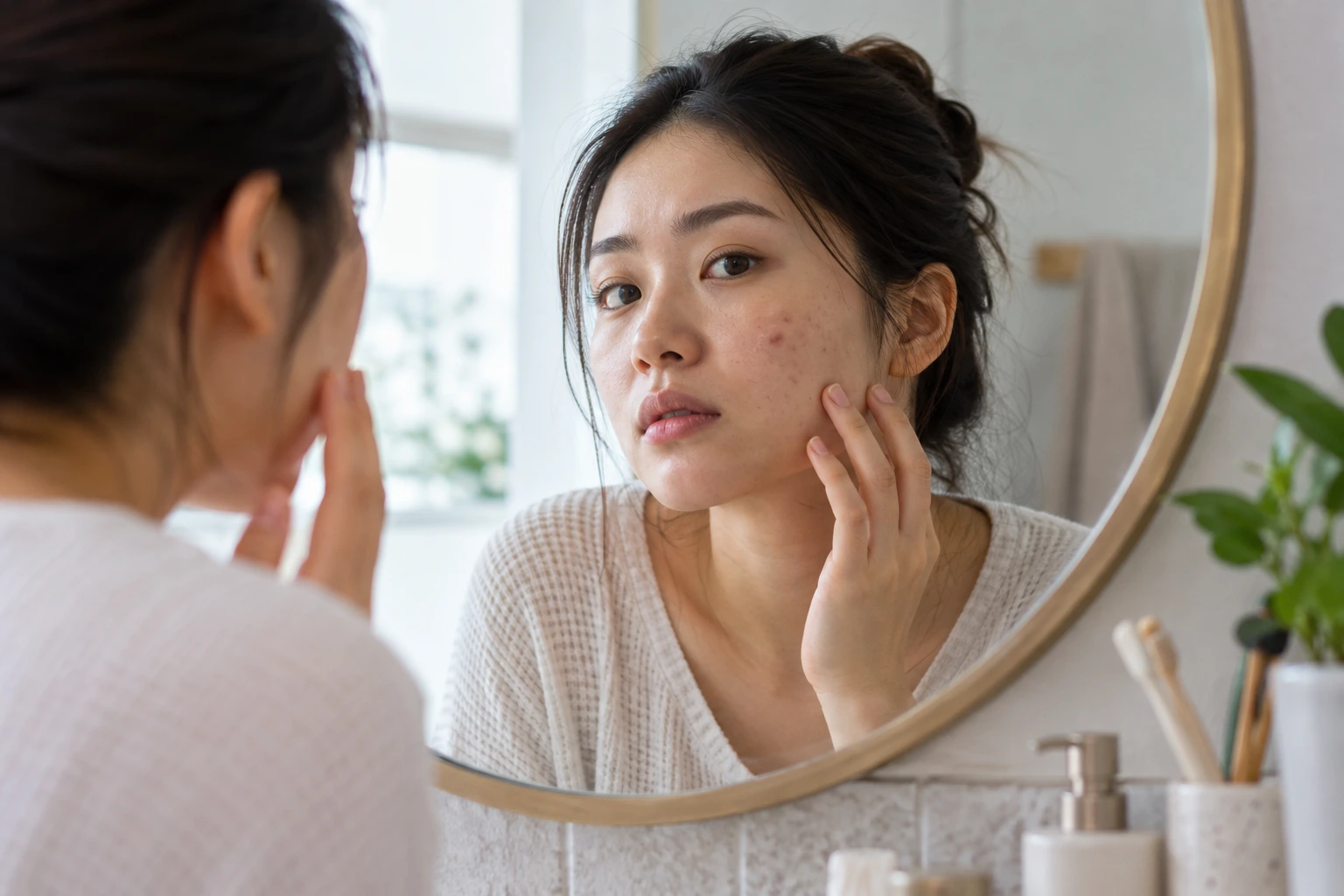
Azelaic acid is a topical ingredient that affects tyrosinase, abnormal melanocyte activity, follicular keratinization, and inflammation, and is used for melasma, post-acne hyperpigmentation, and acne. It is not necessarily gentler than hydroquinone or equally effective. Depending on concentration and formulation, it can cause stinging, dryness, and dermatitis, and it is not a whitening cosmetic that removes all deep dermal pigment, freckles, or age spots.
Definition, effects and precautions at a glance
| Category | What to check |
|---|---|
| Main actions | Tyrosinase inhibition, normalization of keratinization, and anti-inflammatory effects |
| Uses | Melasma, post-acne PIH, and mild acne |
| Expected timing | Gradual changes over several weeks to several months |
| Basic care | Moisturization and broad-spectrum protection from ultraviolet and visible light |
| Main risks | Stinging, dryness, erythema, contact dermatitis, and rare hypopigmentation |
Definition and mechanism
Azelaic acid inhibits tyrosinase, which is involved in melanin synthesis, and may act selectively on abnormal melanocytes; it also regulates follicular keratinization and inflammation. It can therefore address both pigment and acne in skin affected by both concerns, but tolerability varies with the skin barrier, concentration, formulation, and combined ingredients.
Potential benefits and limitations
Randomized studies and meta-analyses have reported that 15–20% azelaic acid may improve measures of melasma, post-acne PIH, and inflammatory and comedonal acne. Some studies found results similar to hydroquinone or advantages in selected measures, but studies differ and the response is gradual. Dermal pigmentation, solar lentigines, nevi, and old, deep scar-related pigmentation require a different diagnosis and treatment.
Who may be suitable and when to avoid treatment
Appropriate candidates are adults who have melasma or brown post-acne marks together with mild acne, or who are seeking an alternative to hydroquinone. Active dermatitis or wounds, an azelaic-acid allergy, very sensitive skin, recent strong peels or laser treatment, and simultaneous use of multiple acids or retinoids must be disclosed. Use during pregnancy or breastfeeding should be checked against the product label and with the treating clinician.
Procedure and expected recovery period
Start with a small amount on completely dry skin after cleansing, and combine it with moisturizer and sun protection. At first, the response may be checked with every-other-day or lower-frequency use. Irritation may increase when combined with retinoids, benzoyl peroxide, AHA/BHA, or scrubs. Results are generally assessed over several weeks to several months; do not continue applying it while enduring severe irritation.

Side effects, contraindications and warning signs
Stinging, itching, dryness, erythema, scaling, and irritant or allergic contact dermatitis may occur. In darker skin tones, severe inflammation can worsen PIH, and hypopigmentation has rarely been reported. Stop use and seek medical attention for severe swelling, blisters, oozing, breathing difficulty, or rapidly spreading hives.
Differences Among Azelaic Acid, Hydroquinone, Tranexamic Acid, and Laser Treatment
| Method | Main goal | Key differences and precautions |
|---|---|---|
| Azelaic acid | Regulates pigment, keratinization, and inflammation together | Stinging, dryness, and a gradual response |
| Hydroquinone | Primarily inhibits melanin production | Caution regarding concentration, duration, dermatitis, and long-term misuse |
| Tranexamic acid | Regulates the plasmin pathway | Screen oral use for thrombosis risk; topical use may irritate |
| Laser treatment and toning | Selective energy targeting pigment and skin layers | Thermal stimulation may worsen melasma and PIH |
Medical Q&A
Q. Is azelaic acid a cosmetic or a medication?
A. Its classification as a medicine or cosmetic varies by country, concentration, and formulation, so the exact product must be checked.
Q. Is it safer than hydroquinone?
A. Its long-term risk profile differs, but irritation and dermatitis remain possible, so it cannot be considered unconditionally safe.
Q. Can post-acne marks and melasma be treated together?
A. Although both may appear brown, their causes differ, so the concentration and combination treatment should be chosen after diagnosis.
References
A review of the dermatologic mechanisms and indications of azelaic acid (https://pmc.ncbi.nlm.nih.gov/articles/PMC11512533/), a 2024 review of its multiple indications (https://pmc.ncbi.nlm.nih.gov/articles/PMC10809820/), and a meta-analysis of azelaic acid versus hydroquinone for melasma (https://pubmed.ncbi.nlm.nih.gov/37457606/) were consulted. The study of post-acne PIE and PIH is available on PubMed (https://pubmed.ncbi.nlm.nih.gov/38734843/).
SEOLREIM's principle of consultation and treatment directly by the clinic director
SEOLREIM Clinic does not classify every brown mark as melasma. The doctor personally distinguishes among melasma, PIH, freckles, solar lentigines, acne, and skin-barrier problems, then determines the necessary sequence among prescriptions such as azelaic acid and hydroquinone, pico toning, laser toning, and IPL, and directly manages treatment according to SEOLREIM’s principles of authentic products, correct quantities, and attentive care.
Information for international visitors
Visitors searching for “pigmentation treatment Korea” or “acne treatment Korea” should disclose current retinoids, acid ingredients, whitening agents, recent laser treatment, and whether they can continue prescriptions after returning home. SEOLREIM Clinic is on the 11th floor of the Gangnam 8258 Building, about 1 minute from Exit 3 of Gangnam Station. Appointments can be made through the website’s KakaoTalk consultation, Naver booking, or telephone channels. International visitors comparing information on a Gangnam skin clinic, Seoul skin clinic, Gangnam Station skin clinic, or Korean skin clinic should prepare their passport, allergy information, medication list, recent treatment records, and departure schedule, and should confirm available consultation languages and the scope of interpretation support before booking. Depending on the examination findings, same-day treatment may not be possible, or follow-up after returning home may be necessary.
Author, reviewer, publication date and update date
Written by: SEOLREIM Content Editor / Medical review: Completed / Review confirmation date: 2026-10-23 / Publication date: 2026-09-28 / Updated: 2026-10-27. This is general medical information and does not replace individual diagnosis or a treatment prescription.
SEOLREIM · GANGNAM, SEOUL
Discuss Skin Treatments in Seoul with Seolreim Clinic.
Seolreim Clinic provides doctor-led consultation and treatment, following its principles of genuine products, accurate quantities and attentive care.
Tell us your treatment interests, skin concerns, dates in Korea and preferred consultation language. Confirm treatment suitability, recovery plans and language support before booking.