
SEOLREIM · JOURNAL
PDT for Acne: Results, Pain, and Recovery—Photosensitizers vs LED
Full professional English translation completed and self-reviewed against the Korean source; numerical tokens and medical cautions preserved; separate medical review of this translation is pending. Translation updated: 2026-10-28.
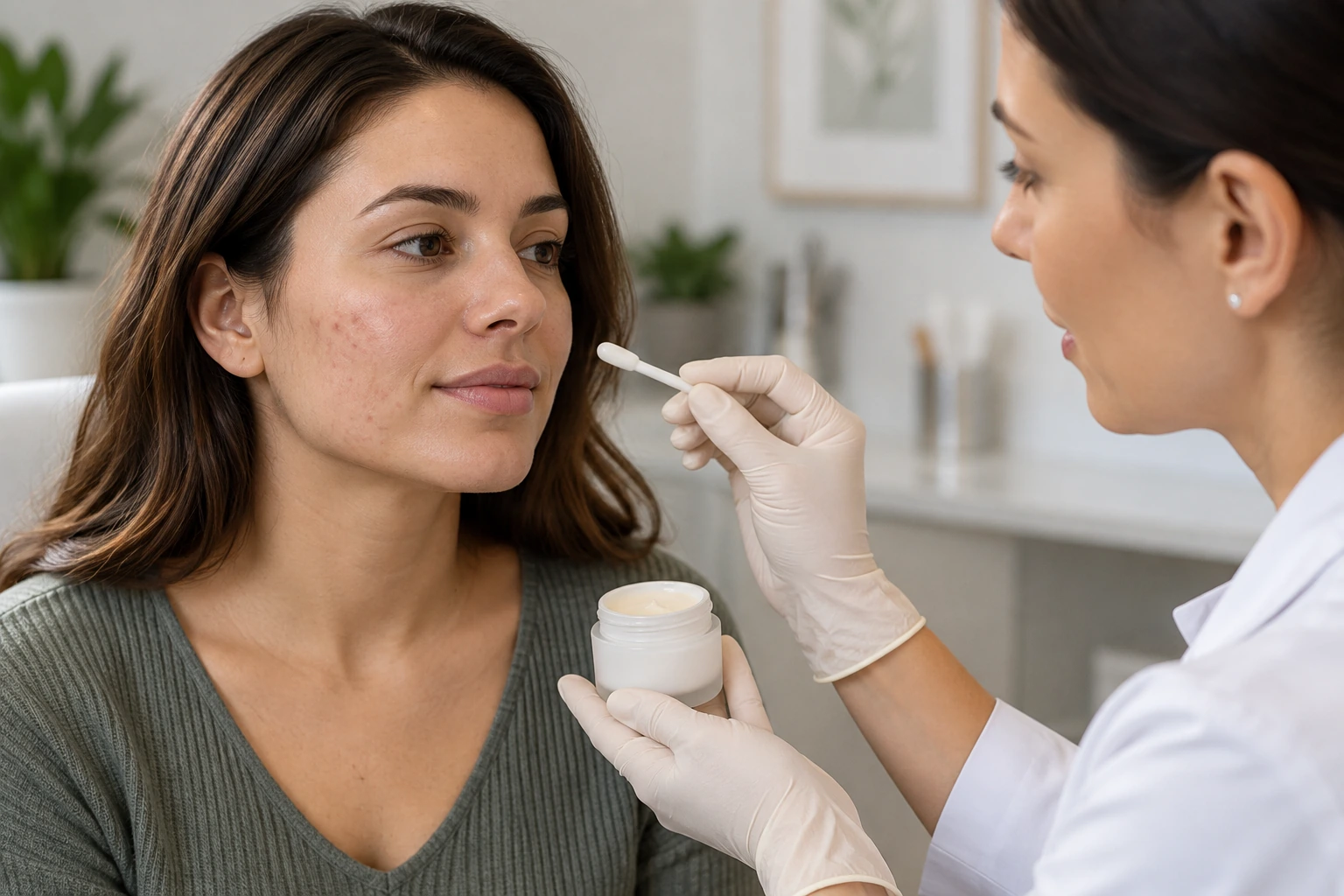
PDT for acne applies a photosensitizer such as ALA or MAL and then illuminates it with a specific wavelength to generate reactive oxygen species, affecting sebaceous glands, Cutibacterium acnes, and inflammation. It is not the same as simple LED illumination or extraction. Results, pain, redness, crusting, and pigmentation vary substantially with photosensitizer concentration, incubation time, light source, and fluence, so it is not a procedure that automatically replaces medication.
Definition, effects and precautions at a glance
| Category | What to check |
|---|---|
| Components | Photosensitizer + light at an appropriate wavelength + tissue-oxygen response |
| Expected scope | Reduction of some inflammatory and sebum-related acne lesions |
| Limitations | Responses differ by comedone, nodule, and scar type, and standard protocols vary |
| Recovery | Burning, erythema, swelling, scaling, and crusting for several days to 1 week or longer |
| Main risks | Phototoxic burns, blisters, PIH or hypopigmentation, infection, and scarring |
Definition and mechanism
ALA or MAL is converted in the skin into a photoactive substance that generates reactive oxygen species when exposed to light in the presence of oxygen. This response may affect sebaceous-gland function, inflammation, and the microbial environment. Light sources—including blue or red LED, IPL, and lasers—as well as pretreatment and incubation time differ, so treatments called “PDT” cannot be assumed to have the same intensity or recovery.
Potential benefits and limitations
Recent systematic reviews report that inflammatory and noninflammatory lesions may decrease with various PDT protocols, but heterogeneity among studies is substantial. PDT may be an adjunctive option for reducing antibiotic use, but it does not address all severe nodules, cysts, scars, and hormonal causes. Reductions in sebum and the duration before recurrence vary widely, and permanent treatment cannot be guaranteed.
Who may be suitable and when to avoid treatment
Appropriate candidates are adults with recurrent inflammatory and sebum-related acne who have reviewed the effectiveness and tolerability of standard topical and oral treatments. Pregnancy or breastfeeding, photosensitivity disorders or porphyria, photosensitizing medication, active herpes, infection or dermatitis, a tendency to form keloids, recent tanning, PIH risk in darker skin tones, and isotretinoin use must be disclosed.
Procedure and expected recovery period
The clinician assesses acne type, medication, scars, and skin tone, cleanses and performs any necessary pretreatment, allows the photosensitizer to absorb for a specified time, and then applies the light source. Burning and pain may occur during treatment, followed by redness, swelling, scaling, and crusting for several days to 1 week or longer. Avoid intense light and sunlight after treatment according to the product instructions, and use moisturizer and sun protection.

Side effects, contraindications and warning signs
In addition to pain, erythema, swelling, itching, and temporary worsening of acne, possible complications include phototoxic burns, blisters, oozing, infection, post-inflammatory hyperpigmentation or hypopigmentation, and rare scarring. Severe pain, widespread blisters, pus, fever, eye pain, or visual changes requires immediate evaluation. Do not combine a photosensitizer with high-output lighting on your own at home.
Differences Among PDT, LED, Acne Medication, and Pico/Fractional Lasers
| Method | Main goal | Key differences and precautions |
|---|---|---|
| PDT | Photochemical reaction between a photosensitizer and light | Pain, photosensitivity, and downtime vary substantially by protocol |
| LED alone | Uses visible light without a photosensitizer | Shorter recovery, but differences in effect size and devices |
| Topical and oral medication | Regulates comedonal, inflammatory, and hormonal pathways | Manage adherence, pregnancy contraindications, and systemic adverse effects |
| Fractional/scar laser | Remodels acne scars | Has a different goal from treating active inflammation |
Medical Q&A
Q. Does PDT end acne without antibiotics?
A. It may serve as an adjunctive treatment, but medication may be needed depending on lesion type.
Q. Is it the same as an LED mask?
A. PDT using a photosensitizer has a different photochemical response and recovery intensity.
Q. Will it permanently reduce pores?
A. Pores may look less visible as sebum decreases, but their structures are not permanently removed.
References
A 2024 systematic review of PDT for acne on PubMed ( https://pubmed.ncbi.nlm.nih.gov/39552358/; original article https://pmc.ncbi.nlm.nih.gov/articles/PMC11829500/) and a network meta-analysis of randomized trials (https://pubmed.ncbi.nlm.nih.gov/36842473/) were consulted. The American Academy of Dermatology’s 2024 acne-guideline overview (https://www.aad.org/news/updated-guidelines-acne-management) prioritizes standard medication and an approach based on severity.
SEOLREIM’s Principle of Direct Consultation and Treatment by the Doctor
SEOLREIM Clinic does not apply PDT uniformly as part of an extraction package. The doctor personally distinguishes among comedones, inflammation, sebum, nodules, scars, and skin tones, then determines the necessary sequence of 2–3 options among medication, extraction, peels, PDT, and the Silky Pore signature program. Treatment is directly managed according to SEOLREIM’s principles of authentic products, correct quantities, and attentive care.
Information for international visitors
Visitors searching for “acne treatment Korea” or “pore treatment Korea” should disclose photosensitizing medication, isotretinoin use, and any history of herpes, and should state how long they can avoid sunlight after treatment and manage burns or PIH after returning home. SEOLREIM Clinic is on the 11th floor of the Gangnam 8258 Building, about 1 minute from Exit 3 of Gangnam Station. Appointments can be made through the website’s KakaoTalk consultation, Naver booking, or telephone channels. International visitors comparing information on a Gangnam skin clinic, Seoul skin clinic, Gangnam Station skin clinic, or Korean skin clinic should prepare their passport, allergy information, medication list, recent treatment records, and departure schedule, and should confirm available consultation languages and the scope of interpretation support before booking. Depending on the examination findings, same-day treatment may not be possible, or follow-up after returning home may be necessary.
Author, reviewer, publication date and update date
Written by: SEOLREIM Content Editor / Medical review: Completed / Review confirmation date: 2026-10-23 / Publication date: 2026-09-27 / Updated: 2026-10-27. This is general medical information and does not replace individual diagnosis or a treatment prescription.
SEOLREIM · GANGNAM, SEOUL
Discuss Skin Treatments in Seoul with Seolreim Clinic.
Seolreim Clinic provides doctor-led consultation and treatment, following its principles of genuine products, accurate quantities and attentive care.
Tell us your treatment interests, skin concerns, dates in Korea and preferred consultation language. Confirm treatment suitability, recovery plans and language support before booking.