
SEOLREIM · JOURNAL
Subcision for acne scars: when it suits rolling scars and the risks of bruising and nodules
Full translation of the Korean article. Translation checked for completeness, numerical consistency and medical meaning; separate medical review of this translation is pending. Translation updated: 2026-10-28.
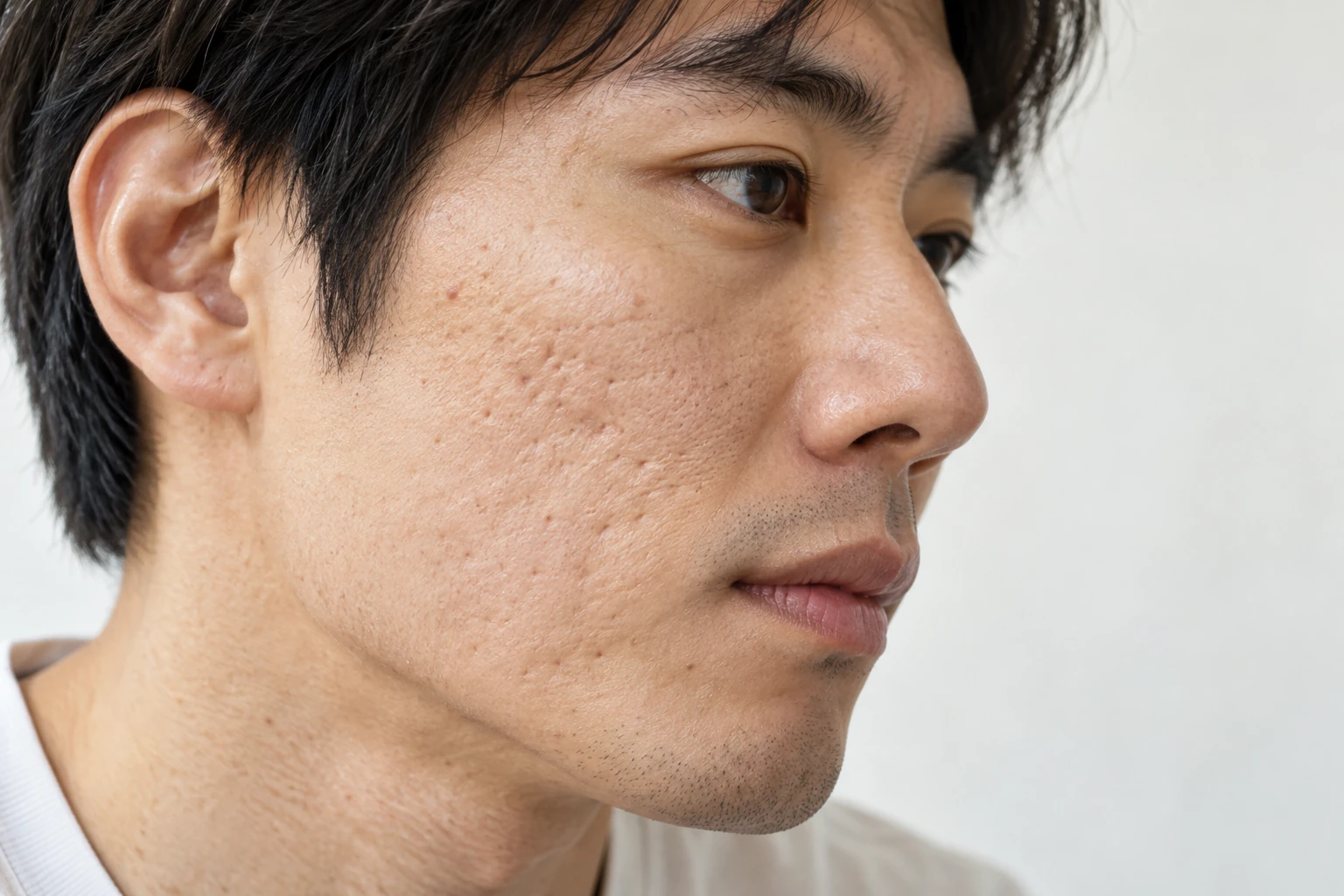
Subcision uses a needle or cannula to release fibrous adhesions tethering scars beneath the skin, helping depressed rolling acne scars. It does not have the same effect on every depressed scar; ice-pick scars and boxcar scars with deep edges may need other treatments. Bruising and swelling can be relatively prominent, making assessment of scar type and vascular risks essential.
Suitability by scar type
| Scar type | Characteristics | Role of subcision |
|---|---|---|
| Rolling | Broad, gently sloping depressions with downward-tethering adhesions | A principal type to consider |
| Boxcar | Depressions with relatively defined edges | Consider combination treatment according to depth and tethering |
| Ice-pick | Narrow, deep holes | Limited effect alone; evaluate other approaches |
| Active acne | Persistent red, painful inflammatory lesions | Treat inflammation before scars |
How the procedure works
After local anesthesia, an instrument is inserted beneath the scar to physically release adhesions. Bleeding and healing responses occur in the released space, helping scars look less tethered. Instrument type, entry points, depth and vascular and nerve anatomy must be considered; more extensive or forceful release is not always better.
Expected effects and limitations
Depth and shadowing may improve in rolling scars with clear tethering. The procedure does not resolve lost dermis, sharp edges, pores and red marks all at once. As scars are often mixed, staged combinations with lasers, radiofrequency microneedling, fillers or TCA CROSS may be considered.
Who may be suitable and when to avoid treatment
Candidates are adults whose active acne has settled and who have confirmed tethered rolling scars. Bleeding disorders, anticoagulants, keloids, active infection or herpes, severe inflammatory acne, areas previously treated with fillers, threads or surgery, pregnancy and breastfeeding require preliminary assessment.
Procedure and expected recovery period
After face washing and photographic documentation, scar types and entry points are marked, followed by local anesthesia, adhesion release and compression for hemostasis. Swelling and tenderness commonly last 2–5 days; bruising may remain visible for 1–2 weeks or longer, so allow time in your schedule. Individual variation is substantial. Do not stop medications that increase bleeding on your own; consult the prescribing clinician. Avoid strenuous exercise, alcohol, saunas and rubbing for the instructed period.

Adverse effects and precautions
Bruising, hematoma, pain, swelling, infection, post-inflammatory hyperpigmentation, surface irregularities, subcutaneous nodules and rare nerve or vascular injury are possible. Worsening swelling and pain, a firm lump on one side, warmth, pus or skin color changes require immediate medical care.
Differences from Fraxel and radiofrequency microneedling
| Procedure | Main target | Main recovery issues and limitations |
|---|---|---|
| Subcision | Adhesions beneath the skin | Bruising and hematoma; limited as a sole treatment for ice-pick scars |
| Fractional laser | Creates microscopic thermal columns in the skin to induce remodeling | Risk of erythema, flaking and PIH |
| Radiofrequency microneedling | Dermal remodeling using needles and radiofrequency heat | Possible bruising, erythema, nodules and burns |
| TCA CROSS | Chemical remodeling of narrow, deep scars | Crusting and PIH; limitations for broad rolling scars |
Medical Q&A
Q. Will one subcision session eliminate my scars?
A. Depending on scar type and degree of tethering, several treatment stages may be needed; complete removal is not guaranteed.
Q. Must filler be added at the same time?
A. It may be considered to support the released space, for example, but requires separate judgment based on the product, vascular risks and previous injection history.
Q. Is this a suitable procedure during a trip?
A. Bruising and swelling can be noticeable, so first confirm how adverse reactions will be managed after returning home, ahead of photography or flight considerations.
References
The American Academy of Dermatology (AAD) advises that different acne scar types require different treatments and combinations (https://www.aad.org/public/diseases/acne/derm-treat/scars/treatment). For studies of combination treatments with subcision, see PubMed (https://pubmed.ncbi.nlm.nih.gov/30924301/); for recently reported major complications, see the original article information (https://onlinelibrary.wiley.com/doi/abs/10.1111/jocd.16629).
SEOLREIM’s principles for classifying scars
At SEOLREIM Clinic, the physician personally discusses treatment order after distinguishing pores, red marks, pigmentation, rolling, boxcar and ice-pick scars. Active acne is stabilized first; the roles of Silky Pore, lasers, radiofrequency microneedling and skin boosters are compared to plan only the necessary treatment.
Information for international visitors
Visitors searching for acne scar treatment in Korea or pore treatment in Korea should prepare records of isotretinoin, antibiotics, anticoagulants, previous fillers and scar procedures. Consider time to conceal bruising and access to medical care after returning home. Overseas visitors searching for dermatology care in Korea or Seoul and comparing clinics in Gangnam or near Gangnam Station should check clinicians, interpretation scope, products used and contact arrangements after returning home together. SEOLREIM Clinic is on floor 11 of Gangnam8258 Building, approximately 1 minute from Exit 3 of Gangnam Station. Overseas visitors should prepare their passport, allergy and medication details, recent treatment records and return schedule; confirm available consultation languages and interpretation scope before booking. During a short trip, same-day treatment may be unavailable depending on the examination.
Author, reviewer, publication date and update date
Written by: SEOLREIM Content Editor / Medical professional review: completed / Review confirmed: 2026-10-23 / Published: 2026-09-23 / Updated: 2026-10-27. General medical information; not a substitute for individual diagnosis or a treatment prescription.
SEOLREIM · GANGNAM, SEOUL
Discuss Skin Treatments in Seoul with Seolreim Clinic.
Seolreim Clinic provides doctor-led consultation and treatment, following its principles of genuine products, accurate quantities and attentive care.
Tell us your treatment interests, skin concerns, dates in Korea and preferred consultation language. Confirm treatment suitability, recovery plans and language support before booking.