
Baby-Soft Skin
Can a sheet mask every day create baby-soft skin like Park Bo-gum’s?

Actor Park Bo-gum showed his sheet-mask skincare routine on television. In last month’s episode of KBS2TV’s variety programme ‘2 Days & 1 Night Season 4’, he walked around the accommodation wearing a mask while preparing for bed. Placing a towel on his pillow to reduce skin friction and pressing the mask firmly into place so it would not lift as he settled down demonstrated his thorough approach to skincare. Seeing Park Bo-gum, known for his consistently radiant skin, care for it with an easily available mask aroused viewers’ curiosity. Can wearing one mask every day really give you clear, smooth, baby-like skin like his?
Is one mask a day really okay? Morning or night: when are the effects greatest?
Ever since the ‘one mask a day’ trend began, dermatology patients have frequently asked, ‘Can I use a mask every day?’ The answer is that masks can temporarily hydrate and soothe, but more frequent use is not necessarily better. In sensitive skin especially, daily masks may instead weaken the barrier and cause problems as irritating ingredients accumulate. Most masks have light, moisture-focused formulas, but many also contain preservatives, fragrance or alcohol; repeated use on sensitive skin can make it more sensitive.
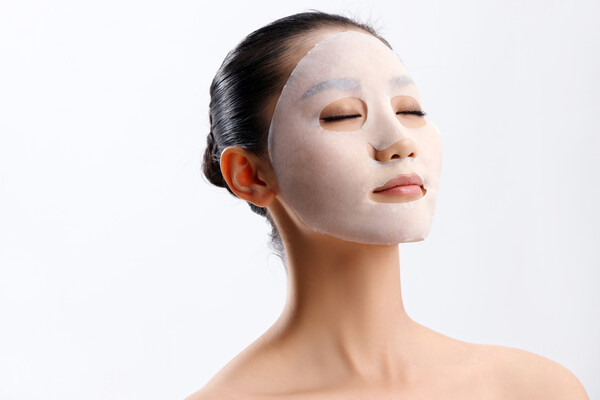
Application time matters too. The usual recommendation is around 15–20 minutes; leaving a mask longer can cause ‘reverse osmosis’, as the drying sheet draws moisture out of the skin. In a dry room or with air conditioning running, the sheet dries faster and can leave skin parched. Some people put a silicone cover or plastic wrap over the mask, but caution is needed: while this prevents evaporation, it can trap heat and clog pores.
The effects also vary according to when the mask is used. In the morning, the main purpose is hydration and texture preparation before makeup, so a light, quickly absorbed watery formula is suitable. Rich, oily products should be avoided because makeup may pill. At night, when skin regeneration is active, ampoule or cream masks that support soothing and recovery are more effective. Products with regenerative ingredients such as EGF, madecassoside and ceramides can help recovery during sleep. However, when there is much dead skin, gentle exfoliation is needed first; when skin is sensitive, such as immediately after peeling, it is safer to wait at least a day before using a mask.
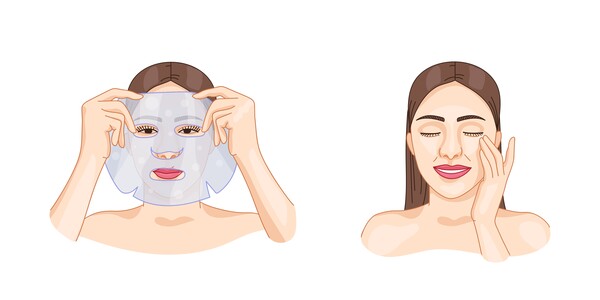
Do today’s popular ‘lifting masks’ really lift? Masks that hook over the ears and wrap around the jawline have recently become popular. Their structure temporarily tightens the face, and they contain cooling and firming ingredients. Products containing collagen, peptides or caffeine can indeed reduce puffiness or create a tightening sensation immediately after use. It is difficult, however, to call this ‘real lifting’. The tight feeling is only temporary; improving elasticity requires energy reaching the dermis and, further still, the SMAS layer.
For better elasticity and refined facial contours, lifting procedures are far more effective than masks. Typical examples are Ultherapy using high-intensity ultrasound and radiofrequency-based Thermage. Ultherapy stimulates SMAS for firmness, while Thermage targets the dermis to improve texture. Ultherapy suits heavy facial tissue or emerging midface sagging; Thermage suits concerns about thin skin’s elasticity and texture. Combined programmes are also attracting attention, pairing devices such as Ultherapy, Thermage FLX, InMode, Shurink and Oligio with Baby Collagen injections, Silky Pore injections or Shining Rejuran.
If procedures feel burdensome, high-performance home-care products can be an alternative. For example, high-molecular-weight moisturising ampoules containing Baby Collagen, and regular care that restores the oil–water balance as Silky Pore injections do, can help skin regain its own balance.
Using a mask daily like Park Bo-gum does not mean you will have his skin. Masks are only supplementary tools for hydration and soothing, and should be used according to skin condition and need. Rather than expecting one mask to transform your skin, consistently using suitable ingredients and care methods is far more effective.
▼ For further details, please visit the official Dr. Seolreim YouTube channel.